The Importance of Solar Cables
In recent years, the global annual growth rate of photovoltaic power generation installations has remained above 20%. From the photovoltaic conversion at the module level to grid connection, every link in the power generation chain relies on cables for electricity transmission. The complex outdoor environment—including high temperatures, intense ultraviolet radiation, rain and snow, and corrosion—imposes demands on cables that far exceed those of conventional power cables.
The critical importance of PV cables lies in three core aspects: First, transmission efficiency directly impacts power generation; high losses from substandard cables can reduce annual output by 3%-5%. Second, reliability under outdoor conditions determines system lifespan, with cable failures being a primary cause of PV system downtime. Third, safety redundancy ensures project compliance, as non-compliant cables pose risks of short circuits, fires, and other hazards. Compared to conventional power cables, PV cables require superior weather resistance, heat resistance, and UV protection while being compatible with high-voltage DC environments. This necessitates unique design, materials, and manufacturing processes.
What Are PV Cables? Core Components and Classification
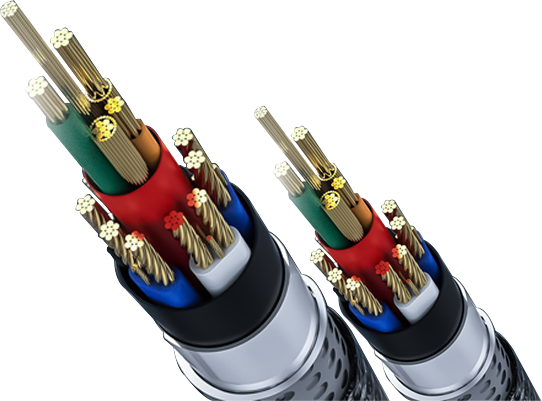
Photovoltaic cables (PV cables) are specialized cables designed for photovoltaic power generation systems. They connect PV modules, combiner boxes, inverters, energy storage devices, and the grid to safely transmit DC and AC power. Their core structure aligns with conventional cables—comprising conductors, insulation, and sheathing—but material selection prioritizes extreme environmental adaptability.
Conductors typically employ high-purity oxygen-free copper to ensure low resistance and high current-carrying capacity, minimizing energy loss. Insulation and sheathing utilize weather-resistant, heat-resistant, and UV-resistant specialty materials (such as cross-linked polyethylene or low-smoke, zero-halogen compounds) to withstand outdoor aging. Some premium products incorporate shielding layers to enhance interference resistance.
Mainstream photovoltaic cable standards and models include: H1Z2Z2-K (EU standard, low-smoke, halogen-free, flame-retardant, suitable for outdoor DC applications), PV1-F (single-core PV-specific cable, temperature range -40°C to 90°C), and UL PV Wire (US standard, e.g., PV1015, tailored for the North American market). Based on current type, photovoltaic cables are categorized into DC (direct current) and AC (alternating current) cables, which differ significantly in voltage ratings and insulation requirements.
DC photovoltaic cables connect PV modules to inverters, supporting high-voltage DC scenarios (typically 1000V DC, with a mainstream trend toward 1500V DC). They demand higher insulation strength and aging resistance. AC PV cables connect inverters to the grid/load, typically operating at 400V AC. Their performance resembles low-voltage power cables but must meet enhanced outdoor weather resistance requirements.
Core Functions of PV Cables in Photovoltaic Systems
PV cables serve as the “lifeblood” connecting the entire photovoltaic system, spanning power generation, busbar collection, inversion, and grid integration. Their role manifests in three key dimensions:
First, they serve as the energy transmission backbone. During module series/parallel connection, cables aggregate DC power from individual modules into combiner boxes. After aggregation, DC cables transmit this power to inverters for AC conversion. Finally, AC cables deliver electricity to the grid or energy storage systems, ensuring uninterrupted, directional flow between core components.
Second, cables are pivotal for energy consumption control. A PV system's generation efficiency depends not only on module conversion rates but also on cable resistance losses (I²R losses), which significantly impact overall returns. High-quality PV cables, with their low resistance characteristics, can limit system line losses to under 2%. Conversely, substandard cables with high losses lead to substantial long-term power generation reductions, eroding project profitability.
Finally, system safety and long-term performance assurance are paramount. As photovoltaic systems operate outdoors, cables must withstand extreme temperatures, humidity, UV radiation, and corrosion. Premium cables deliver stable performance for over 25 years, matching the lifespan of photovoltaic modules. Their superior insulation and fire-resistant properties prevent risks like leakage, short circuits, and fires, ensuring long-term safe and reliable system operation.
Core Characteristics of High-Quality PV Cables
UV Resistance and Weatherability
PV cables endure prolonged outdoor exposure, requiring resilience against intense UV radiation, rain, snow, wind, sand, and ozone erosion. Premium products utilize specialized weather-resistant sheathing materials (e.g., XLPE-modified compounds) to effectively block UV-induced aging, preventing sheath cracking and brittleness. They also deliver superior waterproofing and moisture resistance, ensuring no insulation failure in humid or rainy conditions and matching the outdoor lifespan of the modules.
Temperature Adaptability and Heat Aging Resistance
Photovoltaic systems operate under extreme temperature variations, with daytime temperatures exceeding 60°C in desert regions and nighttime temperatures dropping to -40°C in frigid areas. High-quality PV cables typically maintain operational flexibility and stable insulation performance across a working temperature range of -40°C to 90°C, with short-term overload tolerance up to 120°C. They also exhibit strong thermal aging resistance, preventing accelerated insulation degradation during prolonged high-temperature operation and mitigating breakdown risks.
Electrical and Mechanical Reliability
Electrically, cables must deliver high insulation resistance and low dielectric loss to support 1500V DC high-voltage applications without leakage or tracking hazards. Mechanically, it must balance flexibility with damage resistance—flexibility facilitates installation in complex scenarios like rooftops and component gaps, while abrasion and impact resistance protect against mechanical damage during construction and operation, preventing conductor exposure and associated failures.
Fire Safety and Environmental Protection
Photovoltaic power plants are typically centralized layouts, making fire safety critical. High-quality PV cables predominantly utilize low-smoke zero-halogen (LSZH) and flame-retardant materials. These emit minimal smoke density and release no toxic halogenated gases during combustion, minimizing secondary fire hazards. Additionally, they comply with RoHS environmental standards, being free of heavy metals and harmful substances, aligning with the eco-friendly positioning of green energy projects.
Primary Types and Application Scenarios of PV Cables
DC PV Cables
Primarily used for DC transmission between PV module strings, combiner boxes, and inverters. Rated voltages are typically 1000V DC or 1500V DC, with some high-end products reaching 2000V DC. Designed for high-voltage DC environments, these cables feature thicker insulation and enhanced aging resistance. Typical models include PV1-F and H1Z2Z2-K, serving as core cable types for both distributed and centralized PV systems.
AC Photovoltaic Cables
Used for AC transmission between inverter outputs and distribution cabinets or the utility grid, these cables typically operate at 400V AC (three-phase). Their performance is comparable to conventional low-voltage power cables, but with enhanced outdoor weather resistance and fire-retardant properties. Typical models like YJV22 (XLPE insulation) directly meet grid connection requirements and are widely used in the grid-tie phase of various PV projects.
Single-Core and Multi-Core PV Cables
Single-core PV cables (e.g., PV1-F) offer high flexibility, easy installation, and excellent heat dissipation. They are ideal for module series/parallel connections and confined space installations, making them the mainstream choice for PV systems. Multi-core PV cables integrate multiple conductors for neater wiring, suitable for internal connections in combiner boxes and inverters, as well as short-distance cabling. However, their heat dissipation and flexibility are slightly inferior to single-core cables, requiring selection based on specific installation scenarios.
Typical Application Scenarios for PV Cables
PV cables are applied across all types of photovoltaic projects, accommodating systems of varying scales and configurations:
Residential Distributed PV: Primarily utilizes single-core DC cables (PV1-F) and AC cables for rooftop installations, emphasizing flexibility, safety, and aesthetics to meet household power and grid-connection needs.
Commercial & Industrial PV Plants: Typically employs 1500V DC cables paired with flame-retardant AC cables for factory rooftops and open-ground centralized layouts, balancing high current-carrying capacity with fire safety requirements.
Large-Scale Ground-Mounted PV Plants:
Employ high-temperature resistant, abrasion-resistant, high-voltage-rated PV cables, predominantly single-core DC cables. Designed for large-scale module series/parallel connections and long-distance transmission, ensuring efficient and stable system operation.
Energy Storage and Hybrid Systems:
Requires cables compatible with both DC (battery connections) and AC (grid/load) scenarios. Select cables with weather resistance and high/low-temperature adaptability to ensure coordinated PV-storage operation.
Conclusion
As the “lifeline” of photovoltaic power generation systems, the quality and performance of PV cables directly determine a project's power generation efficiency, safety standards, and lifecycle returns. They represent a core element in ensuring reliable system operation.
Looking ahead, with advancements in high-voltage, intelligent, and eco-friendly technologies, PV cables will further empower photovoltaic systems to enhance quality and efficiency. They will provide more reliable power transmission assurance for the global renewable energy transition, contributing to the achievement of sustainable energy development goals.