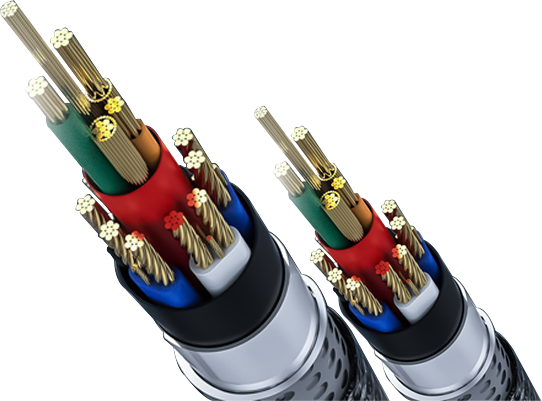
Core Value and Significance of Electrical Wire Selection
Electrical wires refer to insulated conductive carriers that transmit electrical energy or signals through conductors. Their essence lies in the integration of “electrical conductivity” and “insulation protection.” The core significance of correctly selecting wire types is to: match application requirements, ensure safe and stable power supply; reduce energy consumption and operational costs; and comply with industry standards and regulatory requirements.
Electrical wires find application across three core domains: residential settings (lighting, outlets, appliance power supply), commercial environments (office buildings, shopping malls, data center power distribution), and industrial applications (factory equipment, automation systems, renewable energy projects). Significant variations in load intensity, environmental conditions, and operational cycles across these scenarios directly dictate critical wire parameters such as conductor material, insulation type, and voltage rating.
Differences among
wire types primarily stem from five core dimensions: conductor material (copper/aluminum/copper-clad aluminum), stranding type (solid/stranded), insulation material (PVC/XLPE/LSZH, etc.), voltage rating (low-voltage/medium-voltage/high-voltage), and environmental adaptability (indoor/outdoor/underground/high-temperature/corrosive environments). Understanding these distinctions forms the foundation for precise selection.
Defining the Four Key Factors for Electrical Wire Classification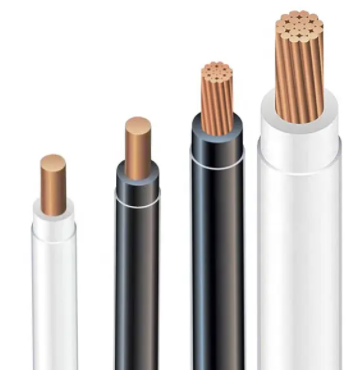
Wire classification is not arbitrary but determined by five core factors that directly define its performance boundaries and application scope:
Conductor Material: Copper vs. Aluminum
The conductor is the core of the wire, with material selection directly impacting conductivity and cost. The mainstream conductor materials are copper and aluminum:
Copper Conductors: Low resistivity (1.72×10⁻⁸ Ω・m), excellent conductivity, high mechanical strength (tensile strength ≥200 MPa), strong corrosion resistance, and stable joint contact resistance. Preferred for medium-to-high voltage, high-load, and safety-critical applications. However, they are costly (approximately 3-4 times the price of aluminum) and heavy (density 8.96 g/cm³).
Aluminum Conductors: Slightly higher resistivity (2.82×10⁻⁸ Ω·m), with electrical conductivity at approximately 61% of copper. However, it offers lower cost and lighter weight (density 2.7 g/cm³, only 30% of copper), making it suitable for long-distance, large-scale overhead installations and cost-sensitive projects. Disadvantages include susceptibility to oxidation, lower mechanical strength, and the need for specialized anti-oxidation treatment at joints.
Stranding Types: Solid vs. Stranded
Based on conductor structure, they are categorized as solid conductors and stranded conductors:
Solid Conductors: Consisting of a single round metal wire, they feature simple construction, low cost, and high mechanical strength. Suitable for fixed installations requiring infrequent bending (e.g., concealed installation within building walls). However, they lack flexibility, become difficult to bend at large cross-sections, and are prone to fracture under bending stress.
Stranded Conductors: Formed by twisting multiple fine metal wires together, they offer exceptional flexibility (bending radius as low as 6 times the conductor's outer diameter) and strong fatigue resistance. They are suitable for mobile equipment, installations in confined spaces, and scenarios requiring frequent bending (e.g., motor connection wires, temporary power cables). However, they are slightly more expensive, and their conductivity is comparable to solid conductors for the same cross-sectional area.
Insulation Materials: Key to Performance and Environmental Adaptability
Insulation materials serve to block current flow and prevent leakage, with their properties directly determining a wire's heat resistance, weather resistance, and safety. Mainstream insulation materials include:
PVC (Polyvinyl Chloride): Low cost, easy processing, resistant to acid and alkali corrosion. Long-term operating temperature: 60-70°C. Suitable for low-voltage, indoor standard environments (e.g., residential wiring). Disadvantages include toxic gas emission when burning and poor heat resistance.
XLPE (Cross-linked Polyethylene): Forms a three-dimensional network structure through cross-linking, offering high heat resistance (long-term operating temperature 90-125°C), high insulation resistance (≥10¹⁴Ω・cm), aging resistance, crack resistance, and low smoke emission during combustion. Suitable for medium-high voltage, industrial high-load, and underground applications, it is currently the most widely used mid-to-high-end insulation material.
PE (Polyethylene): Excellent weather resistance and water resistance, resistant to UV aging, with a long-term operating temperature of 70-90°C. Suitable for outdoor and underground damp environments (e.g., direct-buried power cables).
LSZH (Low Smoke Zero Halogen): Produces low smoke density and releases no toxic gases during combustion, with a toxicity index ≤5. Ideal for densely populated, enclosed spaces (e.g., subways, tunnels, high-rise buildings) due to its exceptional safety. However, it costs over 50% more than PVC.
Voltage Rating: Core Indicator of Load Capacity
Voltage rating determines wire insulation thickness and structural design. Per IEC standards, it is categorized as:
Low Voltage (LV): Rated voltage ≤1kV (e.g., 0.6/1kV), suitable for residential, commercial, and industrial applications.
Medium Voltage (MV): Rated voltage 3.6-35kV, used for urban distribution grids and main power lines in industrial parks.
High Voltage (HV): Rated voltage 66kV and above, used for long-distance, high-capacity power transmission (e.g., interregional transmission lines).
Primary Electrical Wire Categories and Characteristics
Based on application scenarios and performance differences, electrical wires can be categorized into six core types, each with defined applicability boundaries and representative examples:
Building Wiring: Mainstay for Residential and Commercial Distribution
Building wiring specifically refers to low-voltage cables for fixed installation within structures like residences, office buildings, and shopping malls. Core requirements are safety, cost-effectiveness, and ease of installation.
Representative Examples:
THHN/THWN (UL Standard): PVC-insulated, nylon-sheathed copper conductors with a 90°C continuous operating temperature. THHN is suitable for dry environments, while THWN offers moisture resistance. These are the mainstream building wires in the North American market, used for concealed wall installation and cable tray applications.
NM-B (Romex, UL Standard): Non-metallic sheathed building wire with PVC insulation and integral PVC sheath, copper conductor. Suitable for residential interior wiring (e.g., lighting, outlets) without conduit, offering convenient installation.
H07V-U/H07V-R (IEC Standard): PVC-insulated, PVC-sheathed. H07V-U features solid single-core conductors, while H07V-R uses stranded single-core conductors. Rated voltage 450/750V. Suitable for fixed building installations in Europe and most global regions, offering high versatility.
Core Characteristics: Low voltage (450/750V or 0.6/1kV), primarily PVC insulation (some XLPE variants), predominantly copper conductors, simple construction, moderate cost.
Applications: Residential indoor lighting, outlets, air conditioning power supply; office building and shopping mall distribution trunk and branch circuits; concealed installation within building walls, cable trench laying.
Power Cables: Core Conveyors for Industry and Distribution
Power cables transmit high-power electricity across low, medium, and high voltage levels, serving industrial production, urban distribution grids, and long-distance transmission.
Representative Examples:
NYY (IEC Standard): PVC-insulated, PVC-sheathed, multi-core copper cable rated at 0.6/1kV. Suitable for building distribution and industrial low-voltage systems with high versatility.
N2XY (IEC Standard): XLPE-insulated, PVC-sheathed, copper-core multi-conductor cable rated at 0.6/1kV. Offers superior heat resistance and aging resistance compared to NYY, suitable for industrial high-load applications.
YJV (GB Standard): XLPE-insulated, PVC-sheathed, copper-core multi-conductor cable rated at 0.6/1kV-26/35kV. China's mainstream cable for industrial and power distribution systems, suitable for underground installation and industrial plant power supply.
Core Characteristics: Classified by voltage as LV/MV/HV; insulation primarily XLPE (medium-high voltage) or PVC (low voltage); mostly multi-core structure; some with armor (mechanical protection); high current-carrying capacity; strong weather resistance.
Application Scenarios: Urban underground distribution networks; industrial park trunk lines and equipment power supply; power plant and substation feeders; long-distance overhead or direct-buried transmission.
Flexible Cables: Power Solutions for Mobile Equipment
Flexible cables specifically refer to cables with high flexibility, wear resistance, and fatigue resistance, suitable for mobile equipment, temporary power supply, and scenarios involving frequent bending.
Representative Examples:
H05VV-F/H07RN-F (IEC Standard): H05VV-F features PVC insulation and PVC sheathing with fine-stranded cores for superior flexibility; H07RN-F offers rubber insulation and rubber sheathing with enhanced abrasion resistance and weatherproofing, rated at 450/750V. Welding Cables: Natural rubber insulation and rubber sheathing with fine-stranded copper conductors, offering exceptional flexibility, high-temperature resistance, and spark resistance for connecting welding machines to torches.
Chain-Guided Cables: Flexible and abrasion-resistant, suitable for chain-guided systems in CNC machines and robots, capable of withstanding millions of bending cycles.
Core Characteristics: Conductors feature fine stranded wires (high flexibility rating), with insulation and sheathing typically made of rubber or flexible PVC. Offers abrasion resistance and fatigue resistance, with some variants providing oil resistance and weather resistance.
Application Scenarios: Temporary power supply at construction sites; mobile machinery (e.g., cranes, conveyor belts); welding machines, handheld power tools; connecting moving components in robots and automated equipment.
Conclusion: Scientific Selection is the Core
Electrical System Safety and Efficiency Electrical wire selection isn't about “higher grade is always better,” but rather “precise matching”—Residential standard scenarios: PVC-insulated copper building wires for balanced economy and safety; Industrial high-load scenarios: XLPE-insulated power cables for guaranteed performance and longevity; Large cost-sensitive projects: Aluminum-core XLPE cables for cost-demand equilibrium; Special cables should be selected for extreme environments (high temperatures, fire hazards, confined spaces) to mitigate safety risks. Understanding the core differences in wiring (conductors, insulation, voltage ratings, environmental compatibility) and adhering to the “application - performance - compliance” selection logic while avoiding common pitfalls not only reduces initial investment and operational costs but also fundamentally ensures the safe and stable operation of electrical systems.