Electrical Cable: A Complete Expert Guide
Introduction: Understanding the Core Value and Significance of Electrical Cable Selection
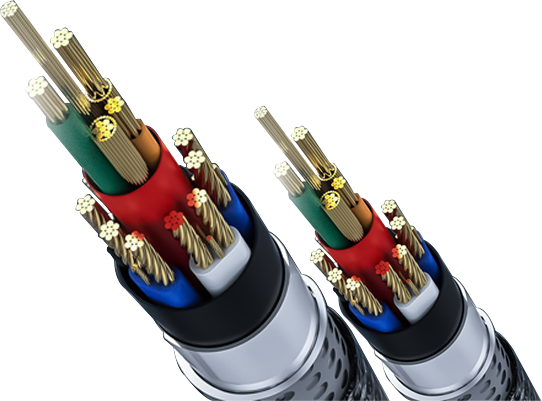
Electrical cables consist of conductors, insulation layers, and protective layers. They serve as carriers for transmitting electrical power and signals, playing a central role in power generation, distribution, control, and communication. They are often referred to as the “blood vessels of power” and the “nerve system of signals.”
Proper selection is critical for the safety, stability, and economic efficiency of power systems. Improper selection can lead to overloading, insulation aging, and failures; scientific selection ensures safety, enhances efficiency, and extends service life.
Basic Structure and Core Components
Conductor: The Core Carrier for Power Transmission
The conductor is the core component for transmitting electrical energy or signals within a cable. Its material and structure directly impact electrical conductivity. Mainstream conductor materials are copper and aluminum:
Copper Conductors: Low resistivity (1.72×10⁻⁸ Ω·m), excellent conductivity, high mechanical strength (tensile strength ≥200 MPa), strong corrosion resistance, and stable joint contact resistance. Preferred for medium-to-high voltage, high-load, and safety-critical applications. However, they are costly (approximately 3-4 times that of aluminum) and heavy (density 8.96 g/cm³).
Aluminum conductors: Slightly higher resistivity (2.82×10⁻⁸ Ω·m), with electrical conductivity at approximately 61% of copper. They offer lower cost and lighter weight (density 2.7 g/cm³, only 30% of copper), making them suitable for long-distance, large-scale overhead installations and cost-sensitive projects. Disadvantages include susceptibility to oxidation, lower mechanical strength, and the need for specialized anti-oxidation treatment at joints.
Conductor structures are categorized into solid conductors (single metal strand, suitable for fixed installations) and stranded conductors (multiple fine metal strands twisted together, offering flexibility for mobile equipment or applications involving frequent bending).
Insulation Layer: The Safety Barrier for Electrical Isolation
Encasing the conductor, the insulation layer prevents current leakage and ensures electrical isolation. Its properties directly determine the cable's heat resistance, weather resistance, and safety. Mainstream insulation materials include:
PVC (Polyvinyl Chloride): Low cost, easy processing, resistant to acid and alkali corrosion. Long-term operating temperature: 60-70°C. Suitable for low-voltage, indoor standard environments (e.g., residential wiring). Disadvantages include toxic gas emission when burning and poor heat resistance.
XLPE (Cross-linked Polyethylene): Forms a three-dimensional network structure through cross-linking, contains no plasticizers, and offers high stability. It has a long-term operating temperature of 90-125°C and can withstand short-term overloads up to 130°C. It features high insulation resistance, aging resistance, crack resistance, and low smoke emission during combustion. Currently the mainstream insulation material for mid-to-high-end cables, it is suitable for medium-to-high voltage, industrial high-load, and underground installation scenarios.
EPR (Ethylene Propylene Rubber): Exceptionally flexible, with excellent low-temperature resistance (-40°C operational capability), ozone resistance, and aging resistance. Suitable for high-temperature, low-temperature, and harsh outdoor environments (e.g., wind power cables, industrial equipment interconnects).
Inner Liner and Armor Layer: Core Mechanical Protection
Liner (Spacer Layer): Positioned between the insulation layer and armor layer, typically made of PVC or PE. Its function is to protect the insulation layer from mechanical damage caused by the armor layer while providing some moisture resistance.
Armor Layer (Optional): Used to enhance the cable's mechanical strength, resisting external compression, impact, and rodent/insect damage. Suitable for underground installation, harsh industrial environments, and similar scenarios. Mainstream armoring types include:
SWA (Steel Tape Armor): Constructed from two layers of galvanized steel tape spirally wound together. Offers high mechanical strength, suitable for direct underground burial and cable trench installation, with moderate cost.
STA (Steel Wire Armor): Available in fine or coarse wire configurations, offering exceptional tensile strength. Suitable for underwater installations and high-drop scenarios (e.g., mines, bridges).
AWA (Aluminum Tape Armor): Lightweight with electromagnetic shielding capabilities. Ideal for industrial control cables requiring shielding.
Outer Sheath: The Final Line of Environmental Defense
Enveloping the cable's outermost layer, the outer sheath protects internal structures from environmental degradation. Materials are selected based on application scenarios:
PVC Sheath: Low-cost, abrasion-resistant, and acid/alkali-resistant. Suitable for indoor and dry outdoor environments.
PE Sheath: Excellent weather resistance, water resistance, and UV aging resistance. Ideal for outdoor and underground damp environments (e.g., direct-buried power cables).
LSZH (Low Smoke Zero Halogen) Sheath: Low smoke density and no toxic gas emission during combustion, toxicity index ≤5. Suitable for densely populated, enclosed scenarios (e.g., subways, tunnels, high-rise buildings). Extremely high safety, but costs over 50% more than PVC.
Classification by Conductor Material and Suitable Applications
Conductor material is the core factor determining a cable's electrical conductivity, cost, and weight. Based on conductor material, cables can be broadly categorized into copper-core and aluminum-core types, each with distinct application scenarios:
Copper-Core Cables: The Preferred Choice for High Performance and Reliability
Copper-core cables utilize copper as the conductor and represent the most widely used cable type today. Their core advantages include superior electrical conductivity, high mechanical strength, strong corrosion resistance, and stable joint performance.
Core Advantages: Low resistivity minimizes power loss; high mechanical strength prevents breakage, making them suitable for complex installation scenarios; oxidation and corrosion resistance ensure a long service life (25-30 years); stable joint contact resistance reduces failure risk.
Limitations: Higher cost and weight; material and transportation expenses increase significantly for large-scale, long-distance installations.
Aluminum-Core Cable: Preferred for Cost and Lightweight Applications
Aluminum-core cables use aluminum as the conductor. Their core advantages include low cost and lightweight properties, making them suitable for cost-sensitive, long-distance, and large-scale installation scenarios.
Core Advantages: Material cost is only 1/3 to 1/4 that of copper; lightweight with a density of just 30% that of copper, reducing transportation and installation costs for long-distance installations; abundant resource reserves and high cost-effectiveness.
Limitations: Inferior electrical conductivity requiring larger cross-sectional area for compensation (1.5-2 times larger than copper for equivalent current capacity); prone to oxidation necessitating anti-oxidant coatings on joints and copper-aluminum transition terminals; low mechanical strength and poor flexibility, unsuitable for frequent bending.
Classification and Compatibility Requirements by Installation Environment
The installation environment directly impacts cable lifespan and safety. Cables are categorized into four main types based on installation conditions, each with specific performance requirements:
Indoor Cables
Suitable for dry or humid indoor environments. Core requirements include stable insulation performance and ease of installation, without special weather resistance or corrosion protection design.
Outdoor Cables
Suitable for exposed outdoor environments, requiring resistance to UV radiation, wind, rain, extreme temperatures, and other natural elements. Core requirements include strong weather resistance, UV protection, and waterproofing.
Underground Cables
Suitable for direct burial or trench installation underground, requiring resistance to soil pressure, corrosion, and rodent/insect damage. Core requirements include high mechanical strength, corrosion resistance, and waterproofing.
Overhead Cables
Suitable for overhead installation, requiring resistance to wind loads, ice/snow loads, and UV radiation. Core requirements include high tensile strength, strong weather resistance, and lightweight construction.
Comparison of Armored vs. Non-Armored Cables
The presence or absence of an armor layer constitutes a key structural difference, directly determining the cable's mechanical protection capability and suitable applications. Core comparisons are as follows:
Armored Cable
Features a metallic armor layer, offering superior mechanical protection against external compression, impact, and rodent/insect damage. Ideal for harsh environments.
Main Types: SWA (Steel Tape Armored), STA (Steel Wire Armored), AWA (Aluminum Tape Armored).
Suitable Scenarios: Direct underground burial, cable trench installation, harsh industrial environments, high-drop scenarios in mines/bridges, underwater installation.
Limitations: Heavy weight, slightly higher installation difficulty; 20%-50% higher cost than non-armored cables; requires grounding of armor layer to prevent induced currents.
Non-Armored Cables
Non-armored cables lack a metallic armor layer, featuring a simple structure. Their core advantages are light weight, low cost, and ease of installation, making them suitable for well-protected environments.
Typical examples: Building wires (H07V-U, THHN), indoor control cables (YY), flexible cables (H07RN-F).
Suitable Scenarios: Dry indoor environments, cable tray installations, conduit installations (where conduits provide mechanical protection), and short-term temporary installations.
Limitations: Weak mechanical protection, unable to withstand external crushing or rodent/insect damage; unsuitable for direct underground burial or harsh environments.
Conclusion: Scientific Selection for Building Safe and Efficient Power Systems
Electrical cables come in diverse types, each with defined performance boundaries and suitable applications. From basic building wires to high-end specialty cables, copper-core to aluminum-core cables, armored to non-armored cables—the core principle of selection is “precisely matching application requirements.”Introduction: Understanding the Core Value and Significance of Electrical Cable Selection
Electrical cables consist of conductors, insulation layers, and protective layers. They serve as carriers for transmitting electrical power and signals, playing a central role in power generation, distribution, control, and communication. They are often referred to as the “blood vessels of power” and the “nerve system of signals.”
Proper selection is critical for the safety, stability, and economic efficiency of power systems. Improper selection can lead to overloading, insulation aging, and failures; scientific selection ensures safety, enhances efficiency, and extends service life.