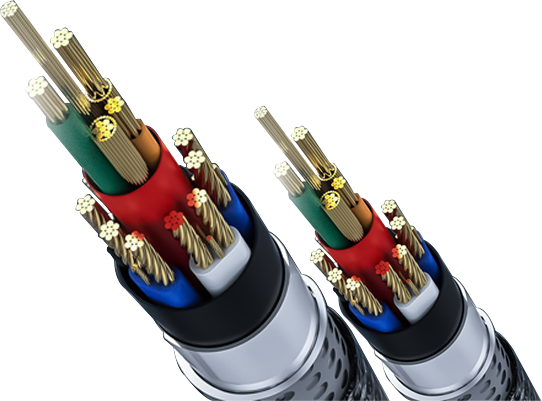
Cable Structure – More Important Than You Think
Electric wires and cables are the "invisible infrastructure" of modern society, widely used in power transmission, industrial control, building wiring, and other scenarios, supporting the normal operation of society.
Many buyers only focus on surface parameters such as conductor material and cross-section when selecting cables, neglecting the core value of the cable structure. In fact, understanding the cable structure is crucial for accurate matching of scenario requirements, avoiding safety risks, reducing maintenance costs, and extending service life.
Cables adopt a "layered design, each layer serving a specific function" structure to adapt to different application scenarios. Below, we will break down its basic structure and explain the function and value of each layer.
Overview of Basic Wire and Cable Structure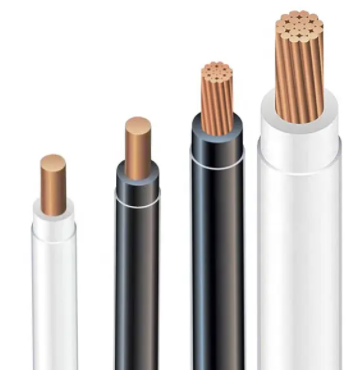
The basic structure of
wires and cables, from inside to outside, is "conductor → insulation layer → inner sheath (optional) → armor layer (optional) → outer sheath," primarily meeting the needs of transmission, safety, and environmental adaptation.
Not all cables contain all layers; the structural complexity depends on the scenario, voltage level, and environment: household BV wires only have a conductor + insulation layer; buried medium-voltage cables require an inner sheath + armor + outer sheath; industrial flexible cables optimize the conductor and sheath to improve flexibility.
Conductor: The "Power Transmission Core" of the Cable
The conductor is the core of the cable, responsible for transmitting electrical energy/signals, and its performance directly determines transmission efficiency.
Common Conductor Materials
Copper (Cu): Excellent conductivity, good flexibility, and wide applicability; disadvantages include high cost and heavy weight;
Aluminum (Al): Lightweight and cost-effective, suitable for long-distance overhead/large-scale power distribution; disadvantages include slightly lower conductivity and poor flexibility.
Conductor Structure Types
Solid conductor: Simple structure, low cost, suitable for short-distance fixed wiring, poor flexibility;
Stranded conductor: Good flexibility, easy for complex installation, the mainstream for industrial/flexible cables;
Compacted/Sector conductor: Reduces outer diameter and saves insulation material, often used in multi-core power cables.
Conductor material and structure affect current carrying capacity, voltage drop, and installation flexibility: stranded copper conductors are suitable for complex wiring, while aluminum conductors are suitable for cost/weight-sensitive overhead projects.
Insulation Layer: The "First Line of Defense" for Electrical Safety
The insulation layer tightly wraps around the conductor, and its core function is to isolate the current, preventing short circuits and leakage caused by contact between conductors or between conductors and external objects. It is a crucial guarantee for the electrical safety of cables; without a qualified insulation layer, even the highest quality conductor cannot be used safely.
Common Insulation Materials
PVC (Polyvinyl Chloride): Low cost, good flame retardancy, and easy processing. It is a common material for household wires and low-voltage cables. The temperature rating is usually ≤70℃, and the weather resistance is average, suitable for dry indoor environments.
XLPE (Cross-linked Polyethylene): Performance is enhanced through cross-linking technology. The temperature rating can reach 90℃-125℃. It has high insulation strength, strong anti-aging ability, and chemical corrosion resistance, making it the preferred insulation material for medium and high-voltage power cables.
Rubber (EPR, Silicone Rubber, etc.): Excellent flexibility, resistance to high and low temperatures, oil resistance, and wear resistance. Suitable for special scenarios such as mobile equipment cables, mining cables, and high-temperature equipment connection lines.
Key Performance of Insulation Layer
Dielectric Strength: The ability to resist voltage breakdown, which directly determines the rated voltage level of the cable;
Heat Resistance: The range of working temperatures it can withstand. The better the heat resistance, the greater the current carrying capacity of the cable;
Flame Retardancy: The ability to prevent flame spread in a fire, which is crucial for the safety of personnel and equipment.
The selection of insulation materials must accurately match the rated voltage and operating temperature of the cable: high-voltage cables require XLPE insulation, and high-temperature equipment connection lines require silicone rubber insulation. If the insulation material does not match the application scenario, it can easily lead to safety hazards such as insulation aging and breakdown.
Inner Sheath/Padding Layer: The "Transition Layer" for Structural Protection
The inner sheath (also known as the padding layer) is a structural layer wrapped around the insulated core. Not all cables require it; it is mainly used in multi-core cables and armored cables, playing a "transitional protection" role.
Core Functions
Protection of insulated wire cores: Prevents the insulation layer from being worn or compressed during subsequent processing and installation;
Auxiliary structural shaping: Fills the gaps between the cores of multi-core cables, making the cable structure more uniform;
Adaptation for armoring: Provides a smooth and flat laying base for the outer armor layer, preventing the sharp edges of the armor layer from piercing the insulation layer.
The inner sheath is commonly made of PVC, PE, or non-woven fabric, and is essential in multi-core power cables and steel tape armored cables—for example, in buried armored cables, the inner sheath effectively isolates the armor layer from the insulated wire cores, preventing the armor layer from corroding the insulation layer after being exposed to moisture, thus extending the cable's service life.
Armor Layer: The "Mechanical Protective Armor" in Harsh Environments
The armor layer is a metal protective layer wrapped around the inner sheath. It is an optional reinforcing structure designed to withstand strong mechanical damage risks. Its core function is to enhance the mechanical strength of the cable and resist external impacts.
Common Armor Types
Steel Tape Armor (STA): Made of two layers of steel tape spirally wound, with strong compression and impact resistance, suitable for buried laying, tunnel wiring, industrial areas, and other scenarios prone to compression;
Steel Wire Armor (SWA): Made of twisted fine steel wires, with extremely high tensile strength, suitable for submarine cables, vertically laid mine cables, long-distance overhead cables, and other scenarios requiring tensile strength;
Aluminum Wire Armor (AWA): Lightweight design, combining mechanical protection and corrosion resistance, suitable for overhead or buried cables in coastal and humid areas.
The use of an armor layer should be considered based on the application: When the cable is used in environments prone to external damage, such as underground, industrial outdoor areas, and mines, an armor layer is necessary; however, ordinary indoor wiring does not require armoring—the armor layer increases the weight and hardness of the cable, reducing flexibility, which not only increases installation difficulty but also leads to wasted costs. VII. Outer Sheath: The Cable's "Environmental Protective Outer Layer"
The outer sheath is the outermost layer of the cable. Regardless of whether there is an armor layer, most cables are equipped with an outer sheath. It is the last line of defense against external environmental erosion and directly determines the cable's service life.
Common Outer Sheath Materials
PVC: High cost-effectiveness, flame-retardant and wear-resistant, easy to process, suitable for indoor and dry environments;
PE/HDPE (Polyethylene/High-Density Polyethylene): Waterproof and moisture-proof, strong UV aging resistance, and chemical corrosion resistance, making it the preferred material for outdoor and buried cables;
LSZH (Low Smoke Zero Halogen): Low smoke and no toxic halogen release during combustion, environmentally friendly and safe, suitable for enclosed spaces with high population density such as subways, tunnels, hospitals, and data centers.
The outer sheath mainly protects against external damage such as moisture, ultraviolet rays, oil stains, chemical reagents, and mechanical wear: the PE outer sheath of outdoor cables can withstand sun exposure, the acid and alkali resistant outer sheath of chemical plant cables can resist chemical corrosion, and the PVC outer sheath of indoor cables can meet basic wear resistance requirements.
Significant Differences in Cable Structure for Different Application Scenarios
Cable structure is not fixed, but rather "tailored" according to the application scenario and voltage level. The structural differences between different types of cables are significant:
Classified by Use
Power cables vs. control cables: Power cables focus on power transmission, with large conductor cross-sections and thick insulation layers, and are often equipped with armor and outer sheaths; control cables focus on signal transmission, with more cores and smaller conductor cross-sections, requiring additional shielding layers and better flexibility.
Building wires vs. industrial cables: Building wires have a simple structure (conductor + insulation layer) and focus on flame retardancy; industrial cables need to adapt to harsh environments and are often equipped with inner sheaths and armor layers for more comprehensive protection.
Classified by Voltage Level
Low-voltage cables (≤1kV): Simple structure, thinner insulation layer; medium and high-voltage cables (10kV and above): require thicker insulation layers and additional shielding layers, and some are equipped with armor to ensure safe high-voltage transmission.
Examples of Typical Cable Structures
ABC Cable (Aerial Bundled Cable): Conductor + XLPE insulation, no armor, no outer sheath, lightweight design, suitable for outdoor overhead power transmission;
Armored Power Cable: Conductor + XLPE insulation + inner sheath + steel tape armor + PE outer sheath, multiple layers of protection, suitable for buried power distribution;
Flexible Rubber Cable: Multi-strand twisted conductor + rubber insulation + rubber outer sheath, no armor, excellent flexibility, suitable for power supply to mobile equipment.
Common Misconceptions about Cable Structures
Purchasers often fall into the following misconceptions when considering cable structures, which should be avoided:
"The thicker the cable, the better the quality": Wrong! The thickness of the cable may be due to unnecessary armor or sheath; the key is whether the structure matches the application scenario – using thick armored cables for indoor wiring is completely unnecessary;
"Only looking at the conductor and ignoring the insulation and sheath": A fatal mistake! Most cable failures stem from insulation aging and sheath damage, not conductor problems. Inferior insulation materials can easily cause short circuits and fires;
"Blindly pursuing the armor layer": The armor layer is for protection, not a standard feature. Using armored cables in scenarios where protection is not needed will increase costs and installation difficulty;
"Ignoring standard certification": Cables that comply with national standards (GB) and international standards (IEC, UL) have undergone rigorous testing of their structure and materials, while non-standard cables may cut corners (such as thin insulation, inferior sheath). X. Understanding the Structure: Empowering Buyers to Make Better Decisions
Understanding the basic structure of cables is of great value to buyers, directly helping them make more informed decisions:
Enhanced Safety: Matching the structural design to the application scenario prevents safety accidents such as short circuits, leakage, and fires at the source;
Increased Reliability: Reasonable layered protection extends the cable's service life, reduces downtime due to failures, and ensures stable project operation;
Optimized Costs: Choosing the structure according to needs avoids the cost waste of "over-protection" and eliminates the later maintenance costs of "insufficient protection";
Reduced Risk: Accurately matching the needs of the application scenario reduces the risk of premature cable failure and supports the long-term success of the project.
Conclusion: Choosing the Right Cable Starts with Understanding the Structure
Each layer of the cable structure performs its specific function and works collaboratively: the conductor transmits electricity, the insulation protects safety, the inner sheath provides shaping, the armor resists damage, and the outer sheath provides weather resistance, all working together to ensure the stable operation of the cable.