Can ABC Cables Be Installed in Coastal Areas?
The harsh environments of coastal areas, such as salt spray, high humidity, and typhoons, pose a significant challenge to power cables. Can ABC cables (overhead insulated cables), the mainstream type of overhead power distribution, be stably used in such environments? This is a primary concern for contractors and developers.
ABC cables are overhead lines composed of multiple insulated conductors twisted together. Their core advantage lies in the insulation layer surrounding the conductors, making them safer and less prone to failure than traditional bare conductors. They are widely used in low and medium voltage power distribution. This article, drawing on 15 years of industry experience, analyzes the feasibility of their coastal applications from the perspectives of environmental challenges, adaptability, installation points, and case studies, providing authoritative references for selection.
In-depth Understanding of ABC Cables: Structure, Advantages, and Conventional Applications
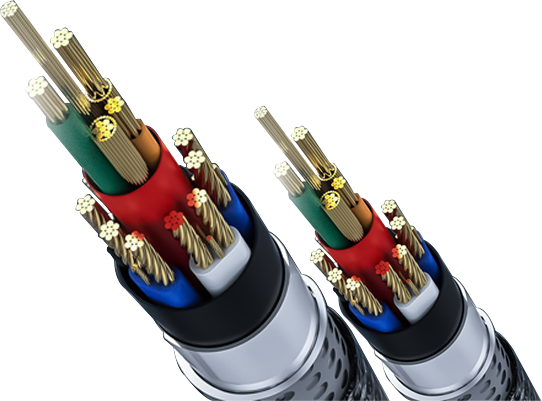
To determine whether ABC cables are suitable for coastal environments, it is essential to understand their core characteristics. Their construction prioritizes "safety + durability": conductors are mostly high-purity aluminum (the mainstream material, lightweight and economical) or copper cores; the insulation layer is crucial, with XLPE (cross-linked polyethylene) being the preferred choice for mid-to-high-end applications due to its high-temperature resistance and aging resistance, followed by PVC. Some models incorporate shielding layers and outer sheaths to enhance anti-interference and abrasion resistance; the compact twisted design saves overhead space and reduces external impacts. Compared to traditional bare conductors, ABC cables offer significant advantages: In terms of safety, the insulation layer isolates the conductor, mitigating the risk of electric shock in densely populated areas (such as coastal scenic spots); aesthetically, the bundled design is neater than bare conductors, fitting the requirements of coastal landscapes; the failure risk is over 60% lower, preventing short circuits caused by branches and birds; installation is convenient, lightweight, and requires no insulating porcelain insulators, increasing efficiency by 30%.
ABC cables have been widely used in rural renovation, urban upgrading, and industrial parks. With the increasing development of coastal areas, the demand for their application in coastal rural areas, resorts, and ports continues to grow.
The "Five Trials" of Coastal Areas: The Core Challenges of Cable Installation .
The natural environment of coastal areas places extremely high demands on the "pressure resistance" of cables, which can be summarized into five core challenges, also key benchmarks for judging the suitability of ABC cables:
Salt Spray Corrosion: The Most Deadly "Invisible Killer" Salt spray in coastal air contains large amounts of corrosive components such as sodium chloride, which can seep into the interior through tiny gaps on the cable surface, causing double corrosion to the conductor, insulation layer, and connecting hardware. 1. **Conductor Corrosion:** Corrosion of conductors leads to increased resistance and transmission losses, potentially causing overheating and burnout. Corrosion of the insulation layer causes aging and cracking, resulting in a sharp decline in insulation performance and short-circuit faults. Under these conditions, the service life of traditional bare conductors or ordinary insulated cables is often shortened from the normal 20 years to 5-8 years.
High Humidity:** Coastal areas typically experience relative humidity above 70% year-round, reaching as high as 90% during the rainy season. This humid environment gradually penetrates the cable insulation layer, reducing its insulation resistance. Especially at joints, improper sealing can allow moisture to seep in, directly causing leakage, increasing power loss and safety risks.
Extreme Weather:** The "Powerful Compressor" of Physical Impact. Typhoons, torrential rains, and strong gusts are frequent visitors to coastal areas. A Category 12 typhoon can reach wind speeds of 32.7 m/s, exerting powerful tensile and impact forces on overhead cables, potentially causing cable strand breakage and tower tilting. Lightning accompanying torrential rains can also induce overvoltages, rupturing the cable insulation layer.
Strong Ultraviolet Radiation: An Accelerator for Insulation Aging. Coastal areas have lower altitudes and higher air transparency, resulting in 20%-30% higher ultraviolet radiation intensity compared to inland areas. Ordinary insulation materials exposed to strong ultraviolet radiation for extended periods will become brittle and crack, losing their insulating protective function. This is a major reason why many cables commonly used inland fail to adapt to coastal environments.
Influence of Biological and Vegetation Elements: A Trigger for Unexpected Failures. Coastal areas have abundant mangrove forests and reeds. If the cable installation height is insufficient, the vegetation swaying in the wind can rub against the cable's outer sheath. Simultaneously, seabirds nesting may peck at the cable insulation or bring in foreign metal objects, causing short circuits, all of which can lead to power outages.
ABC Cables' "Sea Resistance": Dual Protection of Materials and Design.
Facing the "five challenges" of the coastal environment, ABC cables are not "helpless." Their material selection and structural design endow them with excellent weather resistance. The key lies in selecting the right "dedicated model" and implementing appropriate supporting measures.
Insulation Layer: The "First Line of Defense" Against Corrosion and UV Rays. For coastal environments, specialized ABC cables forgo ordinary PVC insulation and adopt weather-resistant XLPE insulation. This material undergoes special UV-resistant and corrosion-resistant modification treatment, effectively resisting salt spray corrosion and strong UV radiation. Its insulation performance remains stable for over 20 years under high temperature and high humidity conditions (85℃). Some high-end models also add a polyolefin sheath to the outer layer of the XLPE insulation, forming "double protection" and further enhancing wear resistance and corrosion resistance.
Conductor: The "Core Support" of Corrosion-Resistant Materials. The conductors of coastal specialized ABC cables mostly use corrosion-resistant aluminum cores or tin-plated copper cores. Aluminum cores themselves have a certain degree of oxidation resistance; after passivation treatment, a dense oxide film forms on the surface, blocking salt spray corrosion. Tin-plated copper cores use a tin layer to isolate salt spray from contact with the copper conductor, preventing the formation of verdigris and ensuring stable conductivity. In contrast, ordinary copper core cables, without anti-corrosion treatment, will show signs of corrosion within 1-2 years in coastal environments.
Structural Design: A "Reinforced Solution" for Extreme Weather To address extreme weather conditions such as typhoons, coastal-specific ABC cables employ a "reinforced stranded structure," reducing the conductor strand pitch to enhance tensile strength and flexibility, enabling them to withstand the instantaneous impact of a category 15 typhoon. The joints feature an IP68-level sealing design, using a double seal of specialized waterproof tape and sealing sleeves to completely prevent moisture and salt spray penetration, solving the long-standing problem of joint corrosion.
Authoritative Certifications: A "Hard Guarantee" of Quality ABC cables meeting coastal installation requirements must pass stringent environmental testing certifications. Internationally recognized certifications include the salt spray resistance test in IEC 60502-2 (low-voltage cable standard) and the ultraviolet aging test in UL 44 (insulated cable standard). Domestically, they must pass the weathering resistance test in GB/T 12527-2008 "Overhead Insulated Cables with Rated Voltage of 1kV and Below." Recognizing these certifications during procurement effectively mitigates the risk of substandard products.
Unique Advantages of ABC Cables in Coastal Areas: Why They Are More Suitable Than Traditional Cables
Compared to traditional bare conductors or ordinary overhead cables, ABC cables offer more significant advantages in coastal areas, which is the core reason why they are the preferred choice for coastal power distribution projects:
Enhanced Safety: Coastal areas are densely populated, especially tourist attractions and fishing ports. The insulation layer of ABC cables completely prevents accidental electric shocks. Simultaneously, the insulation layer isolates the conductor from direct corrosion by salt spray, reducing faults such as wire breaks and short circuits caused by corrosion, improving power supply reliability by more than 50%. After adopting ABC cables, a coastal scenic area reduced the number of power outages from 12 to 3 per year, and tourist complaints decreased significantly.
Significantly Reduced Maintenance Costs: Traditional bare conductors in coastal areas require anti-corrosion treatment and insulation insulator replacement every 1-2 years, resulting in high maintenance costs. The insulation layer and corrosion-resistant conductor design of ABC cables extend their maintenance cycle to 5-8 years, requiring only periodic cleaning of surface salt dust. Based on a 10-kilometer line, the maintenance cost of ABC cables over 10 years is more than 600,000 yuan lower than that of traditional bare conductors, making it particularly beneficial for budget-sensitive rural power grid renovation projects in coastal areas.
Enhanced Landscape Adaptability: Coastal areas are often tourist destinations or ecological reserves, placing high demands on the aesthetics of power facilities. The compact, bundled design of ABC cables is simpler than the cluttered layout of traditional bare conductors, allowing for better integration with coastal landscapes, mangrove ecosystems, and other natural environments, minimizing damage to the natural landscape. This is a key reason why a coastal resort in Hainan abandoned traditional cables and chose ABC cables.
Superior Anti-Interference Capability: Coastal ports and docks are surrounded by numerous industrial equipment. Traditional bare conductors are susceptible to electromagnetic interference affecting power supply quality; however, the insulation and shielding design of ABC cables effectively isolates external electromagnetic interference, ensuring stable power supply to precision equipment and meeting the power distribution needs of port industrial areas.
Key Practical Points for Coastal Installation: A Comprehensive Guide from Selection to Maintenance.
To ensure the long-term stability of ABC cables in coastal areas, simply selecting the right cable is insufficient; details in installation, accessories, and maintenance are crucial. Based on practical experience from multiple coastal projects, the following core points are summarized:
Cable Selection: Choose "Coastal-Specific" Models. Prioritize ABC cables with weather-resistant XLPE insulation and corrosion-resistant conductors. The conductor cross-section should be 10%-15% larger than inland cables of the same power to address conductivity losses in coastal environments. If used in typhoon-prone areas, reinforced cables with a tensile strength ≥120MPa should be selected to ensure wind resistance.Accessories: Upgrade Corrosion Protection. Prioritize aluminum alloy or hot-dip galvanized steel poles with a hot-dip galvanized layer thickness ≥86μm to prevent salt spray corrosion. Use stainless steel or nickel-plated fittings (such as clamps and insulators), and employ coastal-specific anti-corrosion sealing kits for joints to prevent situations where "high-quality cables are hampered by subpar accessories." 3. Installation: Pay close attention to key details. Cable installation height should be 0.5-1 meter higher than inland standards to avoid water splashing from tides and waves, and to prevent friction from vegetation. Anti-vibration hammers should be added at corners and tension towers to reduce cable vibration fatigue during typhoons. Reliable grounding should be ensured, with 2-3 grounding devices per kilometer to resist lightning-induced overvoltage.
Maintenance: Establish a regular inspection mechanism. Clean the cable surface of salt dust and debris monthly. Conduct an insulation performance test annually (using a 5000V megohmmeter; insulation resistance must be ≥100MΩ). Complete a full-line inspection within 24 hours after typhoons and heavy rains, focusing on joint seals and checking for broken strands or insulation cracks. For lines near vegetation, trim the vegetation quarterly to prevent friction damage.
Case Studies: Successful Application of ABC Cables in Coastal Areas
Case studies are the most convincing. The following two real-world projects fully demonstrate the suitability of ABC cables in coastal areas:
Case one: Power Grid Upgrade in a Coastal Fishing Village, Guangdong Province. Previously, this fishing village used traditional bare conductors, requiring replacement 2-3 times annually due to salt spray corrosion, and experiencing an average of 3 power outages per month during typhoon season. In 2020, weather-resistant XLPE insulated ABC cables were installed, along with hot-dip galvanized steel poles and stainless steel fittings, raising the installation height to 7 meters. Four years after the upgrade, only one minor joint loosening occurred after a strong typhoon in 2023, which was quickly repaired and power was restored. The average number of power outages per year has decreased to once, maintenance costs have decreased by 70%, and fishermen's satisfaction has significantly improved.
Case two: Power Distribution Project in a Coastal Tourist Resort in Hainan Province. This resort required power facilities that were "safe, aesthetically pleasing, and eco-friendly." Reinforced ABC cables were ultimately selected, with UV-resistant XLPE insulation and an environmentally friendly polyolefin outer sheath that harmonized with the colors of the scenic area's greenery. Since its commissioning in 2019, the project has withstood numerous typhoons and high humidity weather, maintaining consistently stable cable insulation performance without a single safety incident, making it a "model project" for power distribution in local scenic areas.
Key lessons can be learned from this case: the successful application of ABC cables in coastal areas hinges on the combination of "dedicated models + supporting upgrades + standardized operation and maintenance"—all three are indispensable.
Conclusion: ABC Cables—The Preferred Solution for Coastal Power Distribution
Returning to the initial question: ABC cables are perfectly suitable for installation in coastal areas, offering superior safety, maintenance, and aesthetics compared to traditional cables. With the right coastal-specific models and appropriate supporting measures, they can operate stably even in harsh environments such as salt spray and typhoons. Their weather-resistant materials, insulation structure design, and adaptability to the coastal environment have been validated by numerous practical cases.
Choosing the right cable is crucial for coastal power construction. ABC Cables, with their unique advantages, are poised to become a major force in upgrading coastal power distribution, providing reliable energy security for coastal devel