What Is the Mica Tape in the Cable?
Introduction: The Core Value of Mica Tape in Modern Cable Fire Protection Systems
With the rapid development of modern construction, rail transit, the power industry, and the petrochemical industry, safety standards for power systems continue to rise, and the fire resistance and fireproofing performance of cables have become core indicators in electrical safety design. In fire incidents, ordinary flame-retardant cables are highly susceptible to short circuits, power outages, and fire spread due to high-temperature combustion and insulation failure. This can paralyze emergency lighting, fire alarm, and smoke exhaust systems, significantly increasing the difficulty of evacuation and rescue operations. Therefore, fire-resistant cables capable of ensuring circuit integrity have become essential products in critical settings such as high-rise buildings, subways, hospitals, and power plants.
In the construction of fire-resistant cables, mica tape is the most critical fire-resistant insulation material and the key component that distinguishes standard flame-retardant cables from high-end fire-resistant cables. Unlike standard flame-retardant coatings, mica tape maintains the integrity of the insulation structure even in high-temperature, open-flame environments, ensuring the circuit remains operational for a short period and buying valuable time for fire evacuation, emergency rescue, and equipment shutdown. This article provides a comprehensive overview of cable mica tape, covering its definition, structure, classification, core functions, industry standards, application scenarios, and selection techniques, to help industry professionals deeply understand the decisive role mica tape plays in cable fire safety.
What Is Cable Mica Tape? Basic Definition and Material Composition
Cable mica tape is a high-temperature-resistant, fire-retardant insulating composite material specifically designed for wires and cables, and it serves as the core functional substrate for fire-resistant cables. Composed primarily of natural mica minerals, it is reinforced with glass fiber cloth or polymer film and bonded with high-temperature-resistant silicone adhesive through a composite pressing process. It features high-temperature resistance, non-combustibility, stable insulation, no dripping, and low smoke and low toxicity, making it the most reliable cable fire protection material currently recognized in the power industry.
Mica tape consists primarily of three core components, each working in synergy to ensure fire-resistant and insulating performance:
First, natural mica minerals, which are mainly divided into two categories: phlogopite and muscovite. These serve as the core carriers of fire-resistant properties; they do not melt or carbonize at high temperatures and can stably maintain the insulating structure.
Second, reinforcing substrates, such as glass fiber cloth and polyester film, are used to enhance the mechanical toughness of the mica tape. This addresses the brittleness and susceptibility to fracture inherent in pure mica, making the tape suitable for high-speed cable wrapping production processes.
Third, high-temperature-resistant binders, typically silicone resins, firmly bond to the substrate at room temperature and resist volatilization or degradation at high temperatures, ensuring the mica tape does not delaminate or peel off in high-temperature environments with open flames.
The unique layered crystal structure of mica minerals endows them with exceptional thermal and electrical stability. This is the core reason why mica tape can operate continuously in high-temperature open flames ranging from 750°C to 1000°C, making it the material of choice for fire-resistant cables.
Application Locations and Compatible Cable Types for Mica Tape
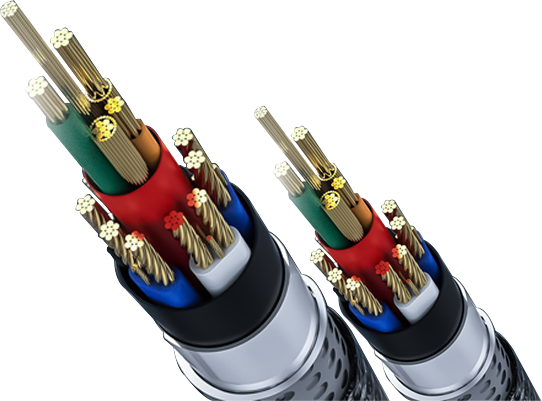
Mica tape is applied to the interior of the cable core structure using a wrapping process. It remains concealed, does not affect the protective performance of the outer sheath, and serves as a hidden core fireproof layer. The industry’s mainstream installation methods are divided into two types: first, wrapping it directly around the outer layer of the cable conductor to serve as the primary fire-resistant insulation barrier; second, wrapping it around the outer side of the insulated conductor, fully enveloping the multi-core cable conductors to comprehensively block high-temperature and flame erosion.
Leveraging its superior fire-resistant insulation properties, mica tape is widely used in various high-safety-grade cables, with core product categories including: fire-resistant power cables, mineral-insulated cables, fire-resistant control cables, marine engineering cables, and low-smoke, halogen-free fire-resistant cables. It is suitable for all scenarios in residential, industrial, and special engineering applications.
Four Core Functions of Cable Mica Tape
Fire Resistance to Protect Circuits, Maintaining Circuit Integrity During a Fire
This is the core value of mica tape. Ordinary cables rapidly carbonize, lose insulation, and experience short circuits and power outages when exposed to open flames. In contrast, mica tape forms a dense, hard insulating protective layer in high-temperature fire environments, continuously maintaining circuit continuity. This ensures that emergency fire suppression systems, lighting systems, and control systems continue to function normally for a short period, meeting the power supply requirements for fire emergency response.
Superior High-Temperature Protection, Suitable for Extreme High-Temperature Conditions
Mica tape possesses excellent thermal stability. Depending on the type, it can withstand temperatures ranging from 750°C to 1000°C for extended periods. During open-flame combustion, it does not melt, drip, or fail rapidly. It can withstand prolonged exposure to intense heat from a fire, protecting the internal conductors and insulation structure from rapid degradation, and is suitable for various high-temperature and high-risk environments.
Stable Electrical Insulation, Eliminating the Risk of High-Temperature Short Circuits
Conventional insulation materials rapidly carbonize and become conductive at high temperatures, leading to secondary accidents such as phase-to-phase short circuits, leakage currents, and explosions. In contrast, mica tape maintains stable dielectric properties even at high temperatures, continuously providing insulation. It effectively prevents electrical connections between conductors and between conductors and the external environment, eliminating short-circuit failures under fire conditions and significantly enhancing cable operational safety.
Flame Barrier: Inhibiting Fire Spread
Mica tape is inherently non-combustible. When tightly wrapped, it forms a continuous fire barrier that effectively prevents flames from penetrating inward. Simultaneously, it slows the combustion rate of combustible materials inside the cable, inhibits the spread of fire along the cable route, reduces the risk of fire propagation, and minimizes fire damage.
How Does Mica Tape Enhance Cable Fire Resistance Ratings? Differences from Standard Flame-Retardant Cables
Many industry professionals often confuse “flame-retardant cables” with “fire-resistant mica tape cables.” The primary function of standard flame-retardant cables is self-extinguishing and preventing fire spread; however, they will still fail rapidly and lose power when exposed to fire. They can only reduce the probability of ignition but cannot ensure continuous circuit operation during a fire.
In contrast, the core advantage of fire-resistant cables with mica tape is maintaining circuit integrity. Under conditions of sustained open flame, the mica tape stabilizes the insulation structure, ensuring the cable remains energized. Combined with low-smoke, halogen-free materials, these cables produce minimal smoke and no toxic gases when burning, making them ideal for densely populated environments such as enclosed buildings, tunnels, and subways. Simply put, flame-retardant cables “prevent fires from spreading,” while fire-resistant cables with mica tape ensure “continued functionality even during a fire.”
High-temperature fire resistance testing; fourth, lightweight design, which reduces the overall weight of the cable to meet the lightweight engineering requirements of rail transit and marine applications.
How Does Mica Tape Enhance a Cable’s Fire Resistance Rating? Differences from Standard Flame-Retardant Cables
Many industry professionals often confuse “flame-retardant cables” with “fire-resistant mica tape cables.” The primary function of standard flame-retardant cables is to self-extinguish and prevent the spread of fire; however, they will still fail rapidly and lose power when exposed to fire. While they can reduce the likelihood of a fire, they cannot ensure the continued operation of the circuit during a fire.
In contrast, the core advantage of fire-resistant cables incorporating mica tape is maintaining circuit integrity. Under conditions of sustained open flame, mica tape maintains the stability of the insulation structure, ensuring the cable remains energized. Combined with low-smoke, halogen-free materials, these cables produce minimal smoke and no toxic gases when burning, making them ideal for densely populated environments such as enclosed buildings, tunnels, and subways. Simply put, flame-retardant cables “prevent fires from growing larger,” while mica tape fire-resistant cables “remain functional even when on fire.”
Conclusion
As the core functional material in fire-resistant cables, mica tape serves as an “invisible barrier” for fire safety in modern power systems. Distinct from ordinary flame-retardant materials, it leverages its core advantages of high-temperature resistance, superior insulation, and the ability to maintain circuit integrity to ensure the normal operation of emergency equipment during fire incidents, thereby safeguarding both buildings and personnel. Although mica tape cables are characterized by complex manufacturing processes and relatively high costs, their safety value is irreplaceable in all critical fire safety and emergency engineering projects. When selecting and procuring cables for projects, it is essential to prioritize legitimate, compliant, and high-quality mica tape fire-resistant cables. This approach eliminates fire safety hazards caused by substandard materials and ensures the long-term safe operation of power systems.