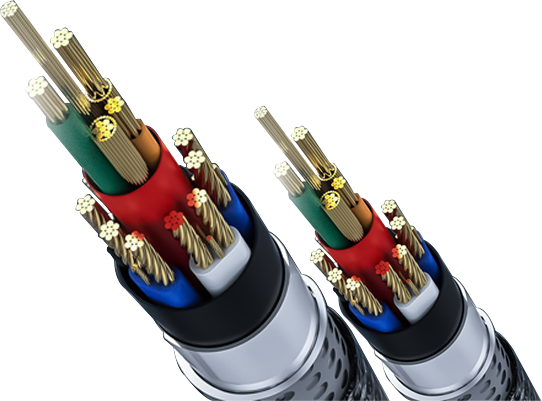
What are the standards for testing of cables?
Cable testing standards are the "hard yardstick" for measuring quality, determining cable safety, stability, and suitability for various applications, and serving as a safety line for power, industrial, and building wiring.
Non-compliant or untested cables can easily lead to short circuits, aging, and other hidden dangers, jeopardizing personal and equipment safety. Testing standards ensure product consistency and protect the rights of all parties through unified specifications.
This article analyzes cable testing standards, systems, types, and applications to help purchasers and engineers understand standards, identify quality, and avoid procurement pitfalls.
What are Cable Testing Standards?
Cable testing standards are unified testing methods, technical requirements, and acceptance criteria formulated for the multiple performance characteristics of cables. They are the core basis for cable production, testing, acceptance, and procurement.
Standards are developed and maintained by authoritative organizations, and are divided into product standards (defining performance indicators) and test method standards (specifying testing methods). Most global markets require cables to comply with these standards before they can be sold.
Major International Cable Testing Standards Organizations and Core Standards
IEC (International Electrotechnical Commission): Globally Applicable Core Standards
IEC is the most influential electrical standards organization globally. Its cable testing standards are adopted or translated into national standards by most countries, covering high and low voltage power cables, control cables, communication cables, etc. Typical standards include: IEC 60228 (conductor standard), IEC 60502 (power cable standard), IEC 60227 (wiring standard), etc., which are the "common language" of the global cable industry.
IEEE & ICEA (North American System): Key Standards for Medium and High Voltage Power Cables
IEEE (Institute of Electrical and Electronics Engineers) and ICEA (Insulated Cable Engineers Association) standards are mainly applicable to the North American market, focusing on medium and high voltage cables in power systems and industry. IEEE standards focus on the performance and application of high-voltage cables, such as IEEE 404 (medium-voltage cable terminal standard); ICEA standards focus on cable manufacturing and testing specifications, and are widely used in procurement by North American power companies.
UL (Underwriters Laboratories): Safety-Oriented Certification Standards
UL focuses on safety testing and certification. Its cable standards focus on fire resistance and electrical safety performance, and are a "passport" for entering the North American market. Typical standards include UL 44 (rubber cable standard) and UL 1581 (wire and cable testing methods). Cables certified by UL must meet stringent safety testing requirements and enjoy high market recognition.
BS (British Standards): Classic standards for building and power cables
BS standards have a long history and are widely used in Europe and Commonwealth countries, primarily covering building wiring and power cables. Typical standards include BS 6346 (power cable standard) and BS 7655 (wiring standard), which impose strict requirements on the fire resistance and mechanical properties of cables, suitable for building and municipal applications.
ASTM (American Society for Testing and Materials): Core standards for materials and performance testing
ASTM standards focus on cable materials (conductors, insulation, sheathing) and mechanical and environmental performance testing, such as ASTM B174 (copper conductor standard) and ASTM D2240 (rubber hardness testing), providing authoritative basis for cable material selection and performance verification.
Regional Standards (Brief Overview)
In addition to the above international standards, each country has its own specific regional standards: ① VDE (Germany): focuses on electrical safety and environmental protection, such as VDE 0281 (power cable standard); ② CSA (Canada): adapted to the North American market and complementary to UL standards; ③ AS/NZS (Australia and New Zealand): building and power cable standards, such as AS/NZS 3000; ④ Domestic standards GB (China): mandatory implementation, such as GB/T 12706 (power cable standard) and GB 5023 (wiring standard); ⑤ Others: IS (India), JIS (Japan), etc., adapted to local market needs.
Cable Testing Types and Their Core Functions
Cable testing is divided into four categories based on the scenario and purpose, covering the entire process of production, acceptance, and use, ensuring quality at every stage:
• Routine Testing: Mandatory for all cables before leaving the factory, targeting core performance characteristics (such as conductor resistance and insulation resistance) to identify defects in mass production;
• Sampling Testing: Samples are taken from batches of products for testing to verify production consistency, such as mechanical performance and aging performance tests;
• Type Testing: Performed when a new product is finalized or when process changes occur, comprehensively verifying all performance indicators to ensure compliance with standard requirements;
• Acceptance Testing: Performed after engineering installation to test the integrity and performance of the cable after laying, preventing failures caused by installation damage.
Electrical Performance Testing Standards: Ensuring Conductive Safety and Transmission Stability
Conductor Resistance Test
Core purpose: To verify whether the conductor material purity and cross-sectional dimensions meet the standards, preventing overheating and increased energy consumption due to excessive conductor resistance. Based on standards such as IEC 60228 and GB/T 3956, the acceptance criterion is that the resistance value does not exceed the upper limit specified in the standard.
Insulation Resistance Test
Core purpose: To detect the integrity of the insulation layer and identify problems such as insulation damage and moisture ingress. The test is significantly affected by temperature and insulation material. Based on standards such as IEC 60093, a higher insulation resistance value indicates better insulation performance.
Withstand Voltage Test (High Voltage Withstand Test)
Divided into AC and DC withstand voltage tests, the core purpose is to verify the insulation layer's ability to withstand high voltage environments and prevent breakdown. Based on standards such as IEC 60694, applying a specified high voltage and maintaining it for a certain period without breakdown or flashover indicates compliance.
Partial Discharge Test (Exclusive to Medium and High Voltage Cables)
Core purpose: To detect internal defects (such as bubbles and impurities) in the insulation layer of medium and high-voltage cables. These defects can lead to partial discharge, accelerating insulation aging. Based on standards such as IEC 60270, this is a key test to ensure the long-term reliable operation of medium and high-voltage cables.
Mechanical Performance Testing Standards: Ensuring Durability During Installation and Use
Tensile Strength and Elongation at Break Test
Core purpose: To evaluate the mechanical durability of the insulation and sheath, preventing cracking and damage during use. According to standards such as IEC 60811, the material is tested for strength and elongation at break. Meeting the standard indicates that the material's toughness and strength are acceptable.
Bending and Flexibility Test
Core purpose: To verify the cable's bending adaptability during installation and use, preventing insulation damage due to excessive bending. According to standards such as IEC 60811, the cable must show no cracking and no degradation in electrical performance after testing.
Impact and Abrasion Resistance Test
Core purpose: To evaluate the cable's ability to withstand external impact and abrasion, suitable for harsh environments such as buried installations and industrial plants. According to standards such as IEC 60811, the cable insulation and sheath must be undamaged and the electrical performance must be normal after testing.
Thermal Performance and Aging Tests: Ensuring High-Temperature Environment Adaptability and Lifespan
The focus is on the stability and lifespan of the cable in high and low-temperature environments. Key tests include:
• Heat Resistance and Thermal Stability Test: Verifying the cable's performance stability under long-term high temperatures, such as the 90°C long-term operation test for XLPE cables, according to IEC 60811;
• Thermal Aging Test: Evaluating the cable's lifespan through accelerated aging tests to predict long-term operational reliability;
• Short-Circuit Temperature Test: Simulating the high-temperature environment during a short circuit to verify the cable conductor and insulation's resistance capabilities, according to IEC 60694.
Fire Performance and Safety Tests: Protecting Personnel and Equipment Safety
Flame Retardancy Test
Divided into vertical and horizontal combustion tests, the core purpose is to prevent flame spread. According to standards such as IEC 60332, the cable flame must self-extinguish within a specified time, and there should be no dripping material that ignites flammable materials below.
Smoke Density Test
Core purpose: To evaluate smoke concentration during a fire, ensuring visibility for evacuation. According to standards such as IEC 61034, lower smoke density indicates higher safety, suitable for crowded areas.
Halogen Content and Acid Gas Testing
Core purpose: To detect whether cables release toxic halogen gases and acidic gases during combustion. Low-smoke, halogen-free (LSZH) cables must pass this test, according to standards such as IEC 60754, suitable for enclosed environments such as subways, hospitals, and data centers.
Fire Resistance Testing
Core purpose: To verify whether cables can maintain circuit integrity during a fire, ensuring emergency power supply, according to standards such as IEC 60331. During the test, the cable must maintain normal power supply in a specified high-temperature flame.
Environmental and Chemical Resistance Testing: Adapting to Complex Scene Requirements
For different application environments, this verifies the cable's ability to resist external corrosion. Key tests include:
• Moisture/Water Penetration Test: Verifies the cable's waterproof ability, suitable for buried and coastal humid environments, according to IEC 60811;
• Oil/Chemical Corrosion Resistance Test: Suitable for chemical workshops and oily environments, verifying the oil resistance and acid-base resistance of insulation and sheathing;
• UV Resistance/Weathering Test: Suitable for outdoor environments, verifying the cable's ability to resist ultraviolet rays, wind, and rain erosion, preventing aging and cracking;
• Low-Temperature Performance Test: Suitable for cold regions, verifying the cable's flexibility and electrical performance at low temperatures, preventing freezing and cracking.
Core Testing Standards for Different Types of Cables
Low-Voltage Power Cables
Core standards: IEC 60502, GB/T 12706 (low-voltage section), key tests: conductor resistance, insulation resistance, voltage withstand test, flame retardancy test.
Medium and High-Voltage Power Cables
Core standards: IEC 60502, GB/T 12706 (medium and high-voltage section), key tests: partial discharge test, voltage withstand test, thermal aging test, short-circuit temperature test.
Control and Instrumentation Cables
Core standards: IEC 60228, IEC 60502, key tests: conductor resistance, insulation resistance, anti-interference test, flexibility test. 4. Building Wiring Cables
Core Standards: IEC 60227, GB 5023. Key Tests: Flame Retardancy Test, Smoke Density Test, Withstand Voltage Test, Thermal Stability Test.
How can purchasers use testing standards for product selection?
Core Actions
Clearly define scenario requirements and match them with corresponding standards (e.g., GB standards for domestic projects, UL/CSA standards for exports to North America); Actively request test reports (routine test reports + third-party certification reports); Verify the authenticity and completeness of the reports, focusing on whether the test items cover the scenario requirements.
Conclusion: Testing Standards are the "Lifeline" of Cable Quality
Cable testing standards are the safety baseline. Compliant cables ensure stable operation and reduce maintenance costs, while non-compliant cables harbor hidden safety risks.
When purchasing cables, don't just look at the price. Use testing standards as the basis to verify quality, match the scenario, and prioritize manufacturers with comprehensive testing capabilities and the ability to provide authoritative reports.