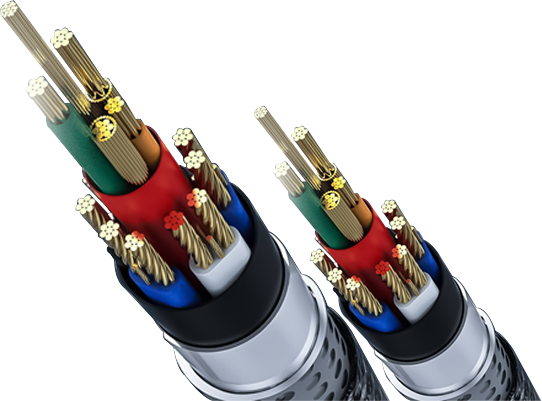
What Is YSLY-JZ Cable? Construction, Applications and Specifications

Sep 10, 2026

Complete Introduction to the YSLY-JZ (Cable YSLY) -JZ Cable

The YSLY-JZ cable is a flexible PVC control cable compliant with German standards, widely used in industrial equipment, automated production lines, internal mechanical systems, and related wiring applications. This cable is designed to balance installation flexibility with reliable signal transmission performance; its core wires are numbered for easy identification by field technicians during installation. The "JZ" suffix indicates that the cable incorporates an integrated yellow-green protective earth wire (PE wire), which is a crucial identifier when selecting this cable model.
The YSLY-JZ cable features a core structure consisting of a multi-strand stranded soft copper conductor, a PVC insulation layer, and a PVC outer sheath; the core is numbered digitally and is paired with a yellow-green protective ground wire, making it suitable for both fixed installation applications and wiring requirements in scenarios involving limited equipment mobility. In industrial automation industry searches, terms such as "YSLY-JZ cable,"  "YSLY-JZ control cable," and "YSLY cable" are frequently searched; consequently, many equipment integrators and electrical engineers prioritize evaluating whether this cable is suitable for their specific project conditions when undertaking control cabinet or machine tool wiring projects.

YSLY-JZ Model Number Breakdown

Y – PVC insulation and sheathing substrate

In the German standard cable naming system, the letter "Y" denotes polyvinyl chloride (PVC) material. In the model YSLY-JZ, the two "Y" characters correspond, respectively, to the core wire insulation layer and the outer sheath base material. PVC offers moderate cost, stable insulation performance, and excellent wear resistance; it effectively protects the conductor and mitigates the risk of leakage current in conventional indoor industrial environments, making it the most commonly used material for general-purpose control cables.

S – Special Twisted Flexible Structure

The letter "S" indicates that this cable features a special stranded conductor construction, distinguishing it from single-strand solid-hard-conductor cables. The stranded structure of multiple fine copper wires significantly enhances the cable's bending performance, making it easier to bend and route during installation – particularly suitable for threading through the confined spaces inside equipment – and serves as the foundation for its use as a flexible control cable.

L – Twisted Copper Conductor

"L" denotes a stranded copper conductor, typically made of bare copper. Copper possesses excellent electrical conductivity; its stranded wire structure ensures high current-carrying capacity while also providing the cable with flexibility. For control cables, conductor flexibility is critical – repeated bending during equipment assembly or maintenance should not cause the conductor to fracture easily, thereby guaranteeing continuous and stable transmission of control signals.

Y – PVC outer sheath

The second "Y" denotes the PVC outer sheath. This sheath encases the core wire after the cable is assembled, providing comprehensive protection against minor mechanical friction and dust contamination, while safeguarding the internal insulated core from external damage. The standard color of the YSLY-JZ outer sheath is typically gray; however, some manufacturers can customize the sheath color upon request – please refer to the product specification sheet for details.

JZ – Built-in yellow-green dual-color protective ground wire

JZ is the primary distinguishing identifier between the YSLY-JZ and YSLY-OZ models. The "JZ" designation indicates that the cable is equipped with a yellow-green dual-color PE protective ground wire; in contrast, the OZ model does not include this protective ground wire.
For example: YSLY-JZ 4G1.5 mm² indicates a cable with 4 cores and a conductor cross-sectional area of 1.5 mm², which includes one yellow-green dual-color protective ground wire. The letter "G" in this model number refers to the European Cable Identification Standard, indicating the presence of a protective ground wire; if the letter is "X", it indicates the absence of a protective ground wire.

YSLY-JZ Cable Structure

Electric conductor

The conductor is a multi-strand fine-stranded bare copper flexible conductor, representing a flexible conductor configuration. The fine-stranded copper wire twisting design balances electrical conductivity with bending flexibility and is a standard feature in flexible control cables. The low resistance of the copper conductor ensures stable transmission of control signals, minimizing signal attenuation, making it suitable for various low-voltage control circuits.

Core wire insulation layer

Each conductor is coated with an extruded PVC insulation layer that isolates conductors belonging to different circuits, thereby preventing short circuits. The core wires are labeled with digital identification numbers to facilitate on-site wiring identification; however, the specific labeling details may vary slightly depending on the manufacturer – therefore, it is advisable to verify the product technical documentation before procurement. The use of numbered core wires helps minimize wiring errors and significantly reduces the complexity of subsequent maintenance and troubleshooting tasks.

Cabling Unit

Multiple insulated conductors are twisted together into a cable core in accordance with established standards. Depending on the number of cable cores and the manufacturer's design, the gaps between the cable cores may be filled with filling material; for certain products, a wrapping tape or winding technique is applied to ensure the roundness of the cable cores, prevent conductor displacement during bending, and maintain the overall structural stability of the cable.

Oversheath

The cable core is externally sheathed with a PVC outer sheath, which serves as the outermost protective layer of the cable. The PVC sheath provides protection against ordinary mechanical abrasion and dust, making it suitable for conventional indoor industrial environments. The most common color of the sheath is gray; for product appearance and dimensional tolerances, please refer to the corresponding manufacturer's specification sheet. The ideal cross-sectional structure, from inner to outer, consists of: copper conductor, PVC insulation layer, cable core, and PVC outer sheath.

YSLY-JZ Cable Core Identification Specification

Core identification is an essential aspect of electrical installation. For standard YSLY-JZ cables, the majority of the conductors are black and marked with numerical identifiers; a separate yellow-green dual-color wire is provided as the protective ground wire. This yellow-green dual-color wire is specifically designated for protective grounding; it is strictly prohibited to use it as a signal or power line during installation. This electrical specification effectively prevents wiring errors and ensures the safety of both equipment and operators.
The details of core wire labeling may vary among different manufacturers; therefore, the color should not be determined solely based on the model number. Before performing wiring operations, it is essential to consult the product data sheet and the corresponding standards provided by the manufacturer to verify the core wire labeling and prevent wiring errors caused by batch variations.

YSLY-JZ Cable – Main Characteristics

table
characteristic parameter declaration
Cable type Flexible control cable
electric conductor Twisted soft copper conductor
insulation material PVC
Sheath material PVC
protective earth wire Equipped with yellow and green dual-color PE wires
Core Wire Identification Digital numbered core wire + yellow-green protective ground wire
rated voltage Determines based on the applicable standard.
flexibility High flexibility
applicable scene Mechanical equipment and automation control systems
Installation Method Fixed installation and limited mobile scenarios
The table provides general reference information. The rated voltage, operating temperature, minimum bending radius, and mechanical properties do not have fixed, universal values; product specifications may vary depending on the manufacturer or the specific version of the standard. When selecting a product, general parameters should not be applied directly; instead, the product standards and the manufacturer's technical manuals must be consulted.


YSLY-JZ Cable Application Scenarios

Industrial machinery and equipment

The YSLY-JZ cable is widely used for control circuit wiring in machine tools, main production units, and various types of industrial processing equipment. Due to the compact internal space of machine tools, cables often need to be routed through bending; however, the excellent flexibility of the YSLY-JZ cable enables it to meet these internal wiring requirements, transmit digital switch signals, and facilitate control functions such as equipment start/stop operation and limit position detection.

Automatic system

In automation projects, this cable is used for signal connectivity between control cabinets, sensors, actuators, motors, and various control components. Given the high number of points along an automated production line, the YSLY-JZ multi-core integrated cable enables the consolidation of multiple control lines into a single cable, simplifying wiring installations and ensuring stable signal circuits.

Control cabinet wiring

This product can be used for internal wiring within control cabinets or for control wiring between the cabinet and external equipment, provided that the operating conditions comply with the specified installation requirements for cables. In the complete electrical cabinet manufacturing industry, the YSLY-JZ is a widely used multi-core control cable.

Conveyer  equipment

This cable can be used for the control circuit wiring of industrial belt conveyor systems; it is responsible for transmitting control signals within the conveyor system, enabling the transmission of control commands such as start/stop operations and speed adjustment.

Various types of manufacturing equipment

YSLY-JZ is widely used in various types of equipment, including packaging machinery, textile machinery, printing machinery, machining equipment, and assembly production lines. These systems often involve a large number of control circuits; the use of multi-core flexible cables can simplify wiring design, facilitate equipment assembly, and streamline subsequent maintenance.

YSLY-JZ Cable Advantages

Flexible structure – easy to install

The multi-strand stranded soft copper conductor offers excellent bending performance, making wiring bends easier and reducing the difficulty of routing cables through confined equipment spaces, thereby enhancing on-site wiring efficiency.

Core wire numbering – facilitates identification and maintenance

The core wires are assigned digital identifiers; this enables rapid circuit localization during installation, wiring, or subsequent maintenance and fault diagnosis, thereby reducing wiring errors and lowering operational and maintenance costs.

Equipped with a built-in protective ground wire to meet safety grounding requirements

Equipped with a built-in yellow-green dual-color PE ground wire; this core wire can be directly used for equipment housing grounding protection, complying with equipment safety standards and suitable for industrial equipment requiring grounding protection.

Multi-core integration – more compact wiring layout

A single cable integrates multiple control芯 wires, eliminating the need to run separate single-core wires individually; this reduces the space required for wiring, simplifies the design, and makes the internal wiring within control cabinets and equipment more organized.

Adapted for general industrial operating conditions

This PVC-insulated and sheathed cable combination is suitable for the vast majority of conventional indoor industrial environments, offers excellent cost-performance ratio, and represents a highly versatile control cable solution for the industrial automation sector.

YSLY-JZ vs. YSLY-OZ

table
Comparison Item YSLY-JZ YSLY-OZ
protective earth wire Includes yellow-green PE wire Unprotected ground wire
Yellow-green dual-color core have not have
Core Wire Identification Numbered core wire + PE ground wire All are numbered core wires.
applicable scene Operating conditions requiring equipment grounding protection Control circuit without grounding protection
Model Example YSLY-JZ 4G1.5mm² YSLY-OZ 4X1.5mm²
YSLY-JZ 4G1.5mm² denotes a 4-core cable including one protective ground wire; YSLY-OZ 4X1.5mm² denotes a 4-core control cable without a protective ground wire. In the European cable identification system, "G" indicates a cable with a protective ground wire, while "X" indicates a cable without a protective ground wire; when selecting a cable, the distinction between "G" and "X" should not be overlooked.

YSLY-JZ – Comparison with Other Control Cables

The most significant difference between YSLY-JZ and YSLY-OZ lies in whether they are equipped with a PE protective ground wire. The YSLY-JZ is a non-shielded cable; in contrast, the CY cable features a copper braided shielding layer that effectively mitigates electromagnetic interference, making it suitable for signal circuits that are susceptible to interference near frequency converters or high-frequency equipment. The YSLY-JZ is unshielded and is designed for use in simple electromagnetic environments, offering better cost-effectiveness.
Compared to YY cables, these cables differ in conductor structure, flexibility, applicable standards, and naming conventions; the flexibility rating and structural design of YY cables are distinct from those of YSLY-JZ. When selecting a cable, it is necessary to refer to the relevant standards for accurate differentiation.
YSLY-JZ is often compared with H05VV5-F and H07VV5-F in selection comparisons; the differences lie in rated voltage, conductor flexibility rating, core wire identification, applicable European standards, and recommended application scenarios.

YSLY-JZ Cable Selection Guidelines

When purchasing the YSLY-JZ cable, please verify each of the following parameters individually to prevent incorrect model selection that could lead to project rework.

Number of core wires

Common specifications include 3G 0.75 mm², 4G 1.0 mm², 5G 1.5 mm², 7G 1.5 mm², 12G 1.5 mm², etc.; the letter "G" denotes the inclusion of a protective ground wire. Determine the number of core wires based on the number of signal circuits required for the project, and reserve additional core wires as backup.

Conductor cross-sectional area

Common cross-sectional areas include 0.5 mm², 0.75 mm², 1.0 mm², 1.5 mm², 2.5 mm², 4 mm², and 6 mm². The cross-sectional area is determined by the circuit current magnitude and the transmission distance; the control circuit is given priority to ensure signal stability.

Rated voltage

The rated voltage must match the operating voltage of the equipment circuit; equipment selection should be performed in strict accordance with the project's electrical specifications.

Operating temperature range

Verify the long-term operating temperature and installation ambient temperature specified by the manufacturer; under high-temperature conditions, the performance of the PVC sheath may degrade – do not operate the device when temperatures exceed the specified limits.

Flexible usage requirements

If the cable is subjected to continuous reciprocating motion, the minimum bending radius, the number of repeated bending cycles, and the travel distance must be verified. The standard YSLY-JZ cable is not designed for continuous reciprocating motion in drag chains; for drag chain applications, a specialized drag chain cable must be used – the standard YSLY-JZ cable cannot be used as a direct substitute.

YSLY-JZ Cable Installation Precautions

When installing the YSLY-JZ cable, strictly adhere to the manufacturer's specified minimum bending radius; the bending angle must not fall below the allowable limit to prevent conductor fracture or insulation cracking. During installation and pulling operations, the pulling force must not exceed the maximum allowable value to avoid thinning of the copper conductor. The cable routing should avoid sharp metal edges, as such edges can easily tear the PVC outer sheath. For cable joints, use a cable gland connector of the appropriate specification for proper sealing.
The yellow-green protective grounding conductor must be reliably grounded to ensure continuous conduction in the grounding circuit. The cable load must not exceed its rated current-carrying capacity to prevent overheating and aging. Additionally, assess the on-site environment: oil contamination, chemicals, or humid conditions can damage the PVC sheath; therefore, the standard YSLY-JZ cable is not suitable for highly corrosive environments or prolonged submersion in water. For continuous dynamic reciprocating movement applications, a specialized flexible cable must be selected.

YSLY-JZ Application Standard Instructions

The YSLY-JZ cable model follows a German-style naming convention rather than representing a globally standardized product code. The relevant reference specifications encompass standard systems such as DIN/VDE, EN, and IEC; however, the specific implementation versions may vary among different manufacturers. For overseas procurement projects, suppliers must provide the corresponding applicable standards, product data sheets, structural parameters, voltage rating, temperature rating, conductor category, test reports, and any additional certificates required by the client. Relying solely on the YSLY-JZ model name to place an order does not fully define the technical specifications – this is a common pitfall in international procurement.

YSLY-JZ Common Specification Reference

table
Cable Model Typical application scenarios
YSLY-JZ 3G0.75 mm² Small control loop
YSLY-JZ 4G1.0 mm² Equipment Control Wiring
YSLY-JZ 5G1.5 mm² Machine tool and control cabinet wiring
YSLY-JZ 7G1.5 mm² Multi-loop control wiring
YSLY-JZ 12G1.5 mm² Complex automation control system
YSLY-JZ 18G1.5 mm² Multiple signal centralized control
The table is for reference purposes only; the available market specifications depend on the manufacturer and the applicable product standards.

YSLY-JZ Cable Labeling

The surface of the finished cable sheath is continuously printed with identification information, typically including the manufacturer's name, cable model, number of conductors and cross-sectional area, rated voltage, applicable standard, and production batch information; some products are equipped with a metering mark for easy length measurement. Typical printed label example: YSLY-JZ 5G1.5 mm² 300/500 V. The labeling format may vary among different manufacturers; please refer to the actual product for accuracy.

YSLY-JZ – Frequently Asked Questions

Q: What is the YSLY-JZ cable? A: The YSLY-JZ is a flexible PVC multi-core control cable featuring an integrated yellow-green protective ground wire.
Q: What does "JZ" represent in the model number? A: "JZ" indicates that the cable is equipped with a yellow-green dual-color PE protective ground wire.
Q: What is the difference between YSLY-JZ and YSLY-OZ? A: YSLY-JZ comes with a protective grounding wire, whereas YSLY-OZ does not.
Q: Is the YSLY-JZ a shielded cable? A: The standard YSLY-JZ is an unshielded cable. If there is strong electromagnetic interference at the site, it is recommended to use a CY shielded cable.
Q: Can the YSLY-JZ be used in dynamic mobile applications? A: It is suitable for applications involving limited-range mobile installation or continuous reciprocating motion with drag chains; however, the manufacturer's bending parameters should be verified separately – it cannot be assumed to be directly compatible.
Q: Can the YSLY-JZ be used directly in outdoor environments? A: You cannot simply determine whether it is suitable for outdoor use based on the model number alone. The PVC sheath has limited weather resistance; therefore, before using it outdoors, please verify its UV resistance performance against the manufacturer's application guidelines.
Q: What do the letters G and X represent in the model number? A: The letter G indicates that the cable includes a yellow-green protective earth wire; the letter X indicates that the cable does not have a protective earth wire.

Conclusion

The YSLY-JZ is a German-standard flexible multi-core control cable featuring stranded soft copper conductors combined with PVC insulation and a PVC outer sheath. The most distinctive feature of the YSLY-JZ compared to the YSLY-OZ is its built-in yellow-green protective ground wire; it is widely used for control signal wiring in industrial machine tools, automated production lines, and control cabinets.
However, when evaluating a cable's rated voltage, temperature resistance, flexibility, or environmental resistance, one should not rely solely on the cable model name; during the procurement and design phases, it is essential to cross-reference the manufacturer's data sheet with the corresponding product standards.
When selecting and procuring YSLY-JZ cables, it is essential to clearly specify the number of conductors, conductor cross-sectional area, rated voltage, applicable standards, purchase quantity, and the actual field operating conditions. By thoroughly communicating these technical requirements to the supplier, you can ensure the selection of cable products that are perfectly suited to your project.
 
Email
CopyRight © 1989 Chunbin Cable Co., Ltd.
Technical support :Coverweb
Fill in you have to consult
We will contact you as soon as we receive the inquiry and ensure the security of your information.
Name*
Email*
Phone
Country
Message*