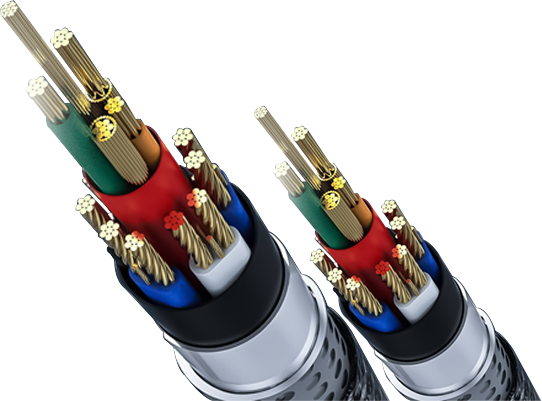
What is Armored Cable?
In electrical power engineering, cable selection directly determines the safety, stability, and service life of the entire power distribution system. Many engineers and procurement personnel often face confusion: when should they use ordinary cables, and when are armored cables mandatory? Why are armored cables strictly required for direct burial, outdoor laying, and tunnel projects, while ordinary cables are sufficient for standard indoor wiring?
Armored cable is a widely used special protective cable in municipal engineering, industrial power distribution, outdoor transmission, and underground pipe network projects. Most common electrical faults such as short circuits, current leakage, and power outages are caused by incorrect cable selection or insufficient protection, resulting in external extrusion, piercing, and mechanical damage to the cable jacket. Choosing the right armored cable effectively avoids hidden safety hazards in long-term project operation.
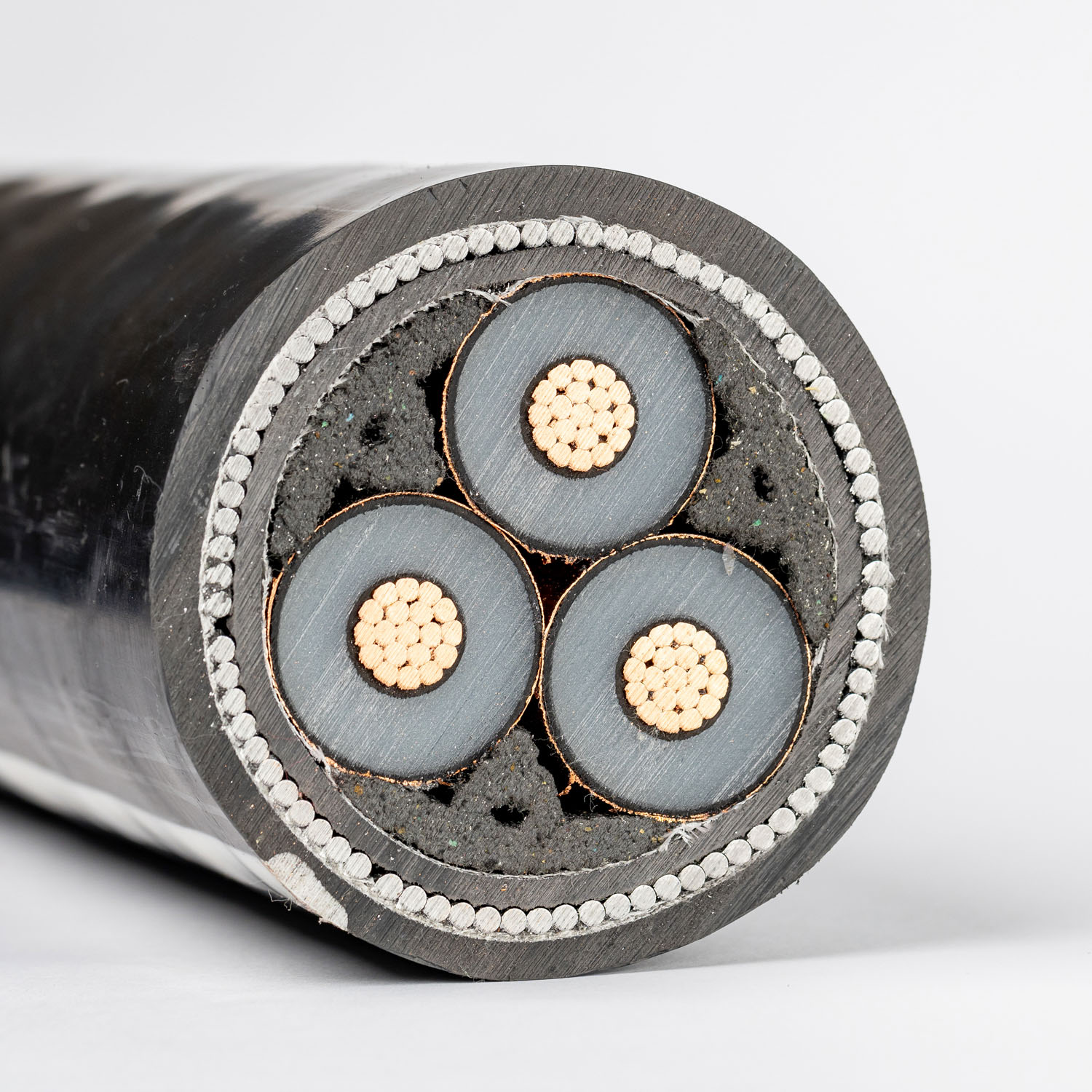
1. What Is an Armored Cable?
An armored cable refers to a power cable with an additional metal protective armor layer outside the conventional insulation and sheath structure. In cable model coding, armored cables are usually marked with the suffix number 22, 32, or 42, such as YJV22, YJLV22, and VV22, which are internationally recognized symbols for armored cables.
Ordinary cables only consist of conductors, insulation layers, and outer sheaths, with weak mechanical protection. They are only suitable for mild indoor environments with no external pressure, friction, or impact. In contrast, armored cables are equipped with reinforced metal armor, providing excellent compression resistance, tensile strength, impact resistance, and puncture resistance. They are specially designed for harsh and complex laying environments where cables are vulnerable to external mechanical damage.
Core function of armored cables: Effectively protect the cable core from mechanical damage, prevent insulation breakdown, short circuits and leakage risks caused by external force, and greatly improve the safety and service life of power lines.
2. Complete Structure of Armored Cable
Armored cables adopt a multi-layer progressive protection structure, and each layer performs an independent protective function, which is the key reason for their strong environmental adaptability. The standard structure of an armored cable is as follows:
1. Conductor Layer: Available in copper or aluminum conductors to ensure stable current carrying capacity and qualified voltage drop, serving as the core of power transmission.
2. Insulation Layer: Made of high-performance XLPE cross-linked polyethylene material, featuring high voltage resistance, aging resistance, and stable electrical performance, preventing phase-to-phase and phase-to-ground breakdown and leakage.
3. Inner Sheath: Wraps the insulation layer to provide isolation, buffering, moisture-proof and anti-wear protection, avoiding direct friction between the metal armor and the internal insulation structure.
4. Armored Layer (Core Protection Layer): Wrapped with galvanized steel tape or galvanized steel wire. Steel tape armor focuses on compression and impact resistance, while steel wire armor focuses on tensile and stretch resistance, adapting to vertical, underwater, and long-distance laying conditions.
5. Outer Sheath: High-density polyethylene (PE) outer jacket with excellent anti-corrosion, waterproof, acid and alkali resistance, and aging resistance, isolating the internal cable structure from external soil, moisture, and corrosive media.
3. Main Types of Armored Cables and Their Differences
Engineering armored cables are mainly divided into steel tape armored cables and steel wire armored cables. The two types have completely different mechanical advantages and application scopes and cannot be substituted arbitrarily in engineering construction.
3.1 Steel Tape Armored Cable
Steel tape armored cables adopt double-layer galvanized steel tape spiral winding structure. Their core advantages are pressure resistance, extrusion resistance, crash resistance and puncture resistance. They can effectively resist soil pressure, road rolling, stone extrusion, and mechanical collision damage during construction.
The main disadvantage is weak tensile performance, so it is not suitable for laying scenarios with large vertical drop and continuous tensile force.
Typical Applications: Underground direct burial, municipal pipe network, green belt burial, roadside underground laying, cable trench horizontal laying, and conventional outdoor ground wiring.
3.2 Steel Wire Armored Cable
Steel wire armored cables are wound with high-strength galvanized steel wires, with far higher mechanical strength than steel tape armored cables. Their most prominent feature is super tensile strength and breakage resistance, which can bear the self-weight tension of long-distance suspended cables.
Meanwhile, they retain excellent compression and impact resistance, with comprehensive protection performance and higher manufacturing cost.
Typical Applications: Vertical shaft laying of high-rise buildings, cross-river and cross-sea underwater laying, mountain slope wiring, high-altitude suspension laying, long-distance vertical shaft engineering, and river and seaside underwater projects.
4. Core Advantages of Armored Cables
4.1 Strong Mechanical Protection to Avoid External Damage
The metal armor layer can effectively resist soil extrusion, heavy pressure, stone piercing, mechanical impact, and animal biting. It provides all-round physical protection for the cable core, greatly reducing line failure rate and adapting to long-term buried and unattended operating conditions.
4.2 Excellent Corrosion Resistance and Waterproof Performance
Equipped with double-layer sheath and sealed structure, armored cables resist soil acid and alkali corrosion, moisture erosion, and groundwater soaking. They can operate stably for a long time in humid underground and open-air outdoor environments, with far stronger environmental adaptability than ordinary cables.
4.3 Extended Service Life
Ordinary buried cables are prone to damage and aging due to external force and corrosion. With complete protective structure, armored cables have outstanding aging and wear resistance. Their service life can reach 25 to 30 years under standard working conditions, greatly reducing later replacement and operation and maintenance costs.
4.4 Auxiliary Grounding Protection to Improve Power Safety
The metal armor layer can be used as an auxiliary grounding device. When cable insulation is damaged, it can quickly leak current and trigger the protection switch to trip, effectively avoiding electric leakage injury and equipment breakdown, and improving the overall safety level of the power distribution system.
5. Disadvantages of Armored Cables
5.1 Higher Procurement Cost
Due to the additional metal armor structure and multi-layer protective process, the raw material and production costs are higher. Under the same specifications, armored cables are more expensive than ordinary non-armored cables, increasing the initial project investment.
5.2 High Hardness and Poor Flexibility
The metal armor increases cable hardness and reduces flexibility, requiring a larger bending radius during laying. It is not suitable for narrow and complex wiring spaces and puts forward higher requirements for construction technology.
5.3 Heavy Weight and High Construction Difficulty
Armored cables are heavier than ordinary cables. Long-distance and high-altitude laying requires professional construction equipment, increasing construction difficulty and labor costs.
6. Armored Cable vs Ordinary Cable: Core Differences
1. Structural Difference: Ordinary cables have no metal armor and only rely on the outer sheath for protection; armored cables add a reinforced metal protective layer with a more stable overall structure.
2. Mechanical Performance: Ordinary cables are easy to deform and pierce under external force; armored cables have excellent compression, tensile and impact resistance.
3. Environmental Adaptability: Ordinary cables are only applicable to protected indoor environments; armored cables adapt to buried, outdoor, underwater, vertical shaft and various harsh working conditions.
4. Service Life: Ordinary cables age rapidly with high failure risks; armored cables feature weather resistance, corrosion resistance and long service life.
5. Cost Performance: Ordinary cables are cost-effective for conventional indoor projects; armored cables are suitable for high-standard projects requiring high safety and protection performance.
Conclusion
With superior mechanical protection, corrosion resistance and aging resistance, armored cables have become standard supporting products for municipal construction, industrial power distribution, new energy infrastructure and outdoor power transmission projects. Distinguishing the applicable scenarios of steel tape armor and steel wire armor and matching cables with actual working conditions are essential professional capabilities for engineering practitioners and purchasers. Standardized selection and construction are the fundamental guarantee for stable and safe operation of power systems.
CHUNBIN CABLE is a professional manufacturer of full-series armored power cables. We strictly control raw material selection, production processes and finished product testing to supply high-quality steel tape armored and steel wire armored cables that fully comply with international IEC standards. Customized specifications, stable performance and competitive pricing support various global engineering projects, including municipal construction, industrial power distribution, offshore engineering and new energy projects. If you have cable selection confusion, technical consultation or procurement demands, feel free to contact our professional team for reliable cable solutions and free project quotations.
Superior Quality Made by CHUNBIN CABLE, China