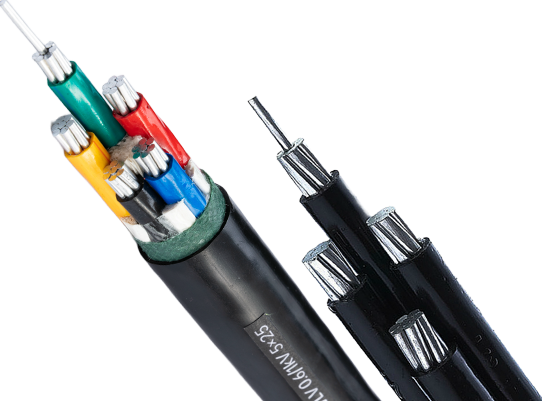
What is covered cable?
In electrical wiring construction, industrial equipment assembly, outdoor power distribution, and daily electrical engineering applications, the term covered cable frequently appears in product selection, design specifications, and construction standards. Many electrical engineers, project purchasers, and construction workers often confuse covered cables with ordinary bare wires, insulated cables, or sheathed cables, leading to incorrect model selection, unqualified construction, shortened cable service life, and even potential electrical safety hazards.
What exactly is a covered cable? What is the structural difference between covered cables and ordinary bare cables and insulated cables? What are the unique performance advantages and applicable scenarios of covered cables? This comprehensive SEO guide will give you a professional and detailed explanation. Starting from the basic definition, structural composition, core functions, classification characteristics, application scenarios, and selection standards of covered cables, this article will fully sort out the key knowledge of covered cables, helping you accurately identify, reasonably select and standardize use covered cables in various engineering projects.
Basic Definition of Covered Cable
A covered cable, also known as covered line wire, refers to a type of electrical cable that wraps a continuous insulating and protective covering layer on the outer surface of a bare metal conductor. Different from bare wires with no outer protection and traditional fully insulated sheathed cables, covered cables adopt a lightweight integrated covering structure, which balances electrical insulation performance, mechanical protection ability and laying flexibility, and is a special wiring medium widely used in low-voltage power distribution and overhead wiring scenarios.
In short, the core feature of a covered cable is bare conductor + single-layer or multi-layer protective covering. Its covering layer is mainly made of PVC, polyethylene, rubber, fabric and other insulating and wear-resistant materials. The main purpose of the covering layer is to isolate the internal metal conductor from the external environment, prevent short-circuit faults caused by foreign object contact, reduce electric leakage risks, and provide basic anti-oxidation and anti-corrosion protection for the conductor.
Covered cables strictly comply with international industry standards such as ICEA S-70-547, DIN 48201 and BS 6485 in terms of structural design and performance parameters. They are different from ordinary household sheathed cables and industrial shielded cables, and are specially optimized for overhead laying, low-voltage power transmission and outdoor temporary wiring scenarios.
Core Structure of Covered Cable
To accurately understand what a covered cable is, we must first clarify its internal structural composition. The structure of a covered cable is simple and efficient, mainly divided into two core parts: internal conductor and external covering layer, without redundant shielding layers, armor layers and multi-layer sheath structures of high-grade cables. This lightweight structure is also the key to its low cost and wide applicability.
Internal Conductor
The internal conductor of the covered cable is usually high-purity copper or aluminum conductor, which can be divided into single solid conductor and stranded conductor. The solid conductor has stable structure and strong pressure resistance, suitable for fixed overhead laying; the stranded conductor has better flexibility, suitable for curved wiring and temporary mobile wiring. The conductor is responsible for the transmission of current, with stable conductivity and low resistance, meeting the long-term power transmission requirements of low-voltage circuits.
External Covering Layer
The covering layer is the core functional layer that distinguishes covered cables from bare wires. It is closely wrapped on the outer surface of the conductor through extrusion, wrapping and other processes. According to different materials, it can be divided into PVC covering, polyethylene covering, rubber covering and fabric covering. The covering layer has three basic core functions: electrical insulation, physical protection and environmental anti-aging. It can effectively isolate the charged conductor, prevent direct contact with the outside world, and avoid short circuit, electric leakage and electric shock accidents.
It is worth noting that the covering layer of covered cables is thinner than the insulating sheath of ordinary formal cables. It focuses on basic insulation and anti-collision protection, and does not have super high pressure resistance and heavy mechanical protection performance, which also determines that covered cables are mostly used in low-voltage, low-load and non-severe mechanical extrusion scenarios.
Key Differences: Covered Cable vs Bare Wire vs Insulated Cable
Most engineering selection errors come from the confusion of covered cables, bare wires and ordinary insulated cables. The three types of cables have essential differences in structure, performance and application scenarios. Mastering the distinguishing points is the premise of correct selection.
Covered Cable vs Bare Wire
Bare wire is a pure metal conductor without any outer covering and insulation layer, which is only suitable for high-voltage overhead power transmission lines with high height and no contact risk. Its biggest disadvantage is poor safety, which is easy to cause short circuit faults due to branch collision, bird contact and foreign object hanging. At the same time, the bare conductor is directly exposed to the air, easy to oxidize and corrode, with short service life.
Covered cables add a complete insulating covering layer on the basis of bare wires, which fundamentally solves the safety problems of bare wires. The covering layer can avoid accidental contact short circuit and electric leakage, and isolate air oxidation and rain corrosion. Although the voltage resistance is lower than that of high-voltage bare wires, it has far higher safety and environmental adaptability, and is the best alternative to low-voltage bare wires.
Covered Cable vs Ordinary Insulated Sheathed Cable
Ordinary insulated sheathed cables adopt multi-layer protection structure of "conductor + insulating layer + outer sheath", with thick protective layer, high mechanical strength, strong pressure resistance and wear resistance, and can adapt to buried laying, pipeline threading and heavy-load industrial scenarios. However, the production cost is high, the cable body is stiff, and the overhead laying flexibility is poor.
The structure of covered cables is simpler and lighter. The single-layer integrated covering design reduces the cable volume and weight, with strong laying flexibility and low cost. The disadvantage is that the mechanical protection and pressure resistance are weak, and it cannot bear strong extrusion and impact. Therefore, it is not suitable for buried and indoor concealed wiring, and is only used for overhead open wiring scenarios.
Main Types of Covered Cables & Their Characteristics
According to different covering materials and structural processes, covered cables on the market are mainly divided into four categories, with different performance advantages and targeted applicable scenarios. Users can select the appropriate type according to the on-site environment and circuit load demand.
PVC Covered Cable
PVC covered cable is the most mainstream and cost-effective type of covered cable. It adopts polyvinyl chloride material as the outer covering layer, with stable insulation performance, good waterproof and dustproof effect, and strong shape retention. The production process is mature, the price is low, and it is suitable for conventional indoor and outdoor overhead wiring, residential community low-voltage power distribution, and rural power grid transformation projects. The disadvantage is that the low-temperature resistance is general, and it is easy to harden and crack in severe cold environments, with average UV aging resistance.
Polyethylene Covered Cable
Polyethylene (PE) covered cable has excellent weather resistance and UV resistance. Compared with PVC materials, PE covering layer has stronger anti-aging ability, can resist long-term sunlight exposure and wind and rain erosion, and will not age, discolor and crack after long-term outdoor operation. It is the preferred type for outdoor long-distance overhead wiring, open-air equipment power supply and outdoor lighting circuits. It has moderate flexibility and stable electrical performance, and is suitable for long-term outdoor harsh environmental wiring.
Rubber Covered Cable
Rubber covered cable uses elastic rubber material as the protective covering layer, with super flexibility, bending resistance and low temperature resistance. The rubber covering layer will not harden and crack in the low-temperature environment of -30℃, and can adapt to frequent bending and mobile wiring. At the same time, it has good wear resistance and buffer performance, and can resist slight friction and extrusion during laying. It is widely used in temporary mobile power supply, construction site temporary wiring, and alpine region overhead power distribution projects.
Fabric Covered Cable
Fabric covered cable is a special type of covered cable with multi-layer composite protection structure. It takes insulating fabric as the outer covering layer, which has high temperature resistance, flame retardancy and corrosion resistance. The fabric covering layer has strong air permeability and high temperature stability, and will not melt and deform in high-temperature environment. It is mainly used for high-temperature workshop wiring, special industrial equipment connection and damp and corrosive environment wiring scenarios, and is a high-performance covered cable for special working conditions.
Core Functions and Advantages of Covered Cables
The wide application of covered cables in power distribution engineering is inseparable from their unique functional advantages. Compared with bare wires and ordinary insulated cables, covered cables have prominent comprehensive advantages in safety, economy, laying convenience and environmental adaptability.
Improve Wiring Safety and Avoid Electrical Faults
The biggest advantage of covered cables is to solve the safety hazards of bare wires. The insulating covering layer can completely isolate the internal charged conductor, effectively preventing short-circuit faults caused by branch collision, bird contact, foreign object hanging and human accidental contact. At the same time, it can avoid electric leakage caused by conductor exposure, reduce the occurrence of electric shock accidents and electrical fires, and greatly improve the safety level of low-voltage overhead wiring systems.
Anti-oxidation and Anti-corrosion to Extend Service Life
The metal conductor of bare wires is directly exposed to the air, and it is easy to oxidize, rust and corrode after long-term contact with oxygen, rainwater and dust, resulting in increased conductor resistance, unstable current and shortened service life. The outer covering layer of covered cables can form a closed protective barrier, isolate the contact between the conductor and the external air and moisture, prevent oxidation and corrosion, and effectively extend the overall service life of the cable. Under the same outdoor environment, the service life of covered cables is more than twice that of bare wires.
Lightweight and Flexible for Easy Laying
Different from the bulky and stiff ordinary sheathed cables, covered cables have simple structure, light weight and good flexibility. The cable body is soft and easy to bend and arrange, which is very suitable for overhead stringing, cross-wall wiring and irregular wiring scenarios. It can effectively improve the laying efficiency, reduce the construction difficulty of overhead wiring, and is more convenient for later circuit maintenance and replacement.
Low Cost and High Engineering Economy
Under the premise of meeting basic insulation and protection requirements, covered cables abandon the redundant multi-layer protective structure of ordinary insulated cables, with simpler production process and lower raw material cost. For large-scale low-voltage overhead power distribution projects such as rural power grids, residential communities and urban street lighting, the use of covered cables can greatly reduce the overall project cost, with high cost performance and significant economic advantages.
Good Environmental Adaptability
Different types of covered cables can adapt to a variety of complex environments. PE covered cables resist outdoor UV aging, rubber covered cables adapt to low-temperature environment, and fabric covered cables resist high temperature and corrosion. Through targeted material matching, covered cables can maintain stable working performance in indoor dry environment, outdoor open-air environment, alpine low-temperature environment and damp industrial environment, with strong environmental adaptability.
Common Application Scenarios of Covered Cables
Covered cables are positioned as low-voltage lightweight protective wiring cables, which are widely used in various scenarios that require basic insulation protection, overhead laying and cost control. The mainstream applicable scenarios in the industry are summarized as follows:
First, rural power grid transformation and low-voltage power distribution. Rural overhead power lines are mostly low-voltage circuits, with scattered wiring and many external interference factors. Covered cables can effectively prevent tree branch short circuits and bird contact faults, and are the mainstream wiring materials for rural low-voltage power grids.
Second, urban street lighting and outdoor lighting engineering. Urban street lamps, community outdoor lighting, park lighting and other circuits are all overhead open wiring, which needs basic rainproof, dustproof and anti-short circuit protection. Covered cables have low cost and stable performance, fully meeting the long-term operation needs of lighting circuits.
Third, temporary power supply for construction sites. Construction site temporary electricity, engineering mobile power supply and other scenarios require flexible wiring, convenient disassembly and replacement. Rubber covered cables with good flexibility and wear resistance are widely used in construction temporary power distribution projects.
Fourth, residential and commercial building overhead wiring. For low-rise building overhead power introduction, community auxiliary power distribution and commercial building outdoor wiring, covered cables can avoid the safety hazards of bare wires, and avoid the cost waste of high-grade insulated cables, with the best comprehensive benefits.
Fifth, special environmental wiring. Fabric covered cables and modified rubber covered cables can be used for high-temperature, damp and slightly corrosive workshop wiring, providing stable basic insulation protection for special industrial scenarios.
Selection and Installation Specifications of Covered Cables
Although the structure of covered cables is simple, non-standard selection and installation will still lead to performance failure and safety hazards. In actual engineering use, the following specification requirements must be followed:
First, match the cable type according to the environment. For ordinary indoor and dry outdoor environments, select conventional PVC covered cables; for long-term outdoor sun exposure, prefer PE covered cables with UV resistance; for low-temperature and frequent bending scenarios, select rubber covered cables; for high-temperature and corrosive environments, select fabric covered cables.
Second, strictly control the voltage level. Covered cables are only applicable to low-voltage power distribution circuits below 1kV, and are prohibited from being used in medium and high-voltage power transmission systems to avoid insulation breakdown and line faults.
Third, standardize overhead laying height and spacing. During overhead wiring, keep a safe distance from trees, buildings and ground, avoid long-term friction and extrusion with external objects, and prevent covering layer damage and insulation failure.
Fourth, prohibit buried and concealed wiring. Covered cables have thin protective layers and poor mechanical pressure resistance, and cannot be used for underground buried laying, pipeline concealed wiring and wall embedded wiring. They are only limited to open overhead laying scenarios.
Common Misunderstandings in the Use of Covered Cables
In actual engineering applications, many users have cognitive misunderstandings of covered cables, resulting in wrong selection and unqualified construction. The following four common mistakes need to be focused on avoiding:
Misunderstanding 1: Covered cables can replace formal insulated cables. Many users think that covered cables with outer protection can be used in all wiring scenarios. In fact, covered cables have weak mechanical protection and low voltage resistance, and cannot bear extrusion, impact and high load operation. They cannot replace ordinary sheathed insulated cables for buried, indoor concealed and high-load industrial wiring.
Misunderstanding 2: All covered cables have weather resistance. Only PE and modified rubber covered cables have UV and aging resistance. Ordinary PVC covered cables are easy to age and crack after long-term outdoor exposure, and are not suitable for long-term open-air laying.
Misunderstanding 3: Covered cables can be used for high-voltage circuits. The insulation thickness of covered cables is thin, and the voltage resistance is limited. Overvoltage operation will lead to insulation breakdown and line short circuit, which is a serious safety hazard.
Misunderstanding 4: Ignore the protection of cable joints. The joints of covered cables lose the protection of the covering layer. If not sealed and protected in time, it is easy to enter water and dust, resulting in electric leakage and oxidation faults. Joint sealing treatment must be done during construction.
9. Conclusion
To sum up, a covered cable is a lightweight low-voltage protective cable with a metal conductor wrapped by an insulating covering layer. It fills the market gap between unsafe bare wires and high-cost fully insulated cables, and has the comprehensive advantages of simple structure, safe use, convenient laying, strong environmental adaptability and low cost.
Different types of covered cables have their own performance characteristics: PVC covered cables are cost-effective for conventional wiring, PE covered cables are weather-resistant for outdoor laying, rubber covered cables are flexible for mobile wiring, and fabric covered cables are high-temperature resistant for special working conditions. In engineering selection, it is necessary to clarify the functional positioning and application limitations of covered cables, select matching products according to the actual wiring environment and circuit parameters, and standardize the laying and connection construction.
As an indispensable basic wiring material in low-voltage power distribution systems, covered cables have irreplaceable application value in rural power grid transformation, urban lighting engineering, temporary power supply and residential overhead wiring. Correct understanding and rational use of covered cables can not only ensure the safe and stable operation of low-voltage circuits, but also effectively control project costs and maximize engineering economic benefits.