What is a concentric conductor in power cables?
A comprehensive analysis of its structural principle, advantages, and applications
In urban power grid upgrades, municipal underground distribution networks, industrial park power supply systems, and residential community power infrastructure projects, concentric conductor power cables are a widely used category of core cables. However, many frontline construction personnel, procurement professionals, and even junior electrical engineers often confuse concentric conductors, conventional neutral wires, cable shielding layers, and dedicated grounding wires, making it difficult for them to clearly distinguish their functional differences and appropriate application scenarios. Many mistakenly perceive these cables as merely simple protective structures; in reality, they are multifunctional core components that integrate current return paths, fault grounding, and electric field shielding – serving as a critical safeguard for the safe and stable operation of modern medium-and low-voltage underground distribution systems. To help readers gain a systematic understanding of concentric conductor cables, this article provides comprehensive guidance covering fundamental definitions, layered structure, operating principles, product types, core advantages, application scenarios, and selection techniques, offering a practical reference for power engineering project selection and implementation.
The fundamental definition and core positioning of Tongxin Conductors
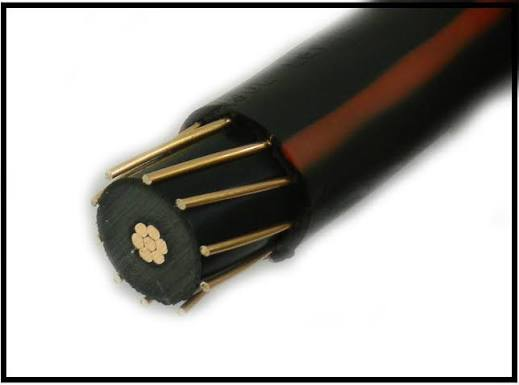
The concentric conductor, also known as the concentric neutral conductor, is an integrated cable structure designed in strict compliance with the IEC and IEEE international power cable standards. It is widely used in medium-and low-voltage underground distribution cable systems operating at voltages ranging from 0.6/1 kV to 35 kV. Unlike traditional power cables, which require a separately installed neutral conductor, the concentric conductor consists of multiple strands of high-purity copper or aluminum wire wound uniformly and orderly around the outer surface of the cable insulation, forming a sealed, uniform cylindrical conductive layer that integrates seamlessly with the cable body, eliminating the need for additional separate cables.
As the core functional component of power cables, the concentric conductor plays a dual role, which is a key reason for its indispensability. Under normal grid operating conditions, it facilitates the return of unbalanced currents in three-phase power supply systems, stabilizes line voltage, and ensures balanced power delivery; when faults such as leakage current, short circuits, or single-phase ground faults occur on the line, it rapidly directs the fault current to provide grounding protection; simultaneously, its annular structure enables electric field shielding, effectively isolating both internal and external electromagnetic interference, thereby comprehensively enhancing the safety and stability of the power distribution system.
The layered structure composition of concentric conductor cables
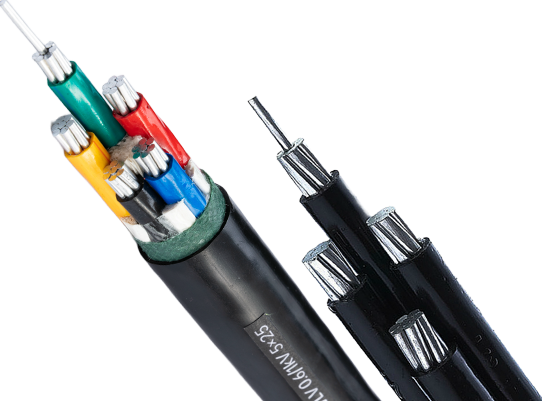
The concentric conductor cable features a multi-layer integrated composite structure in which each layer – from the innermost to the outermost – has a clearly defined role and works in synergy with the others. This design not only ensures stable power transmission but also fulfills multiple functions—including insulation, protection, grounding, and shielding—making the overall structural design both scientifically sound and highly practical.
The innermost layer of the cable is the primary phase conductor, fabricated from solid or multi-strand twisted copper or aluminum material – serving as the core carrier for power transmission. The purity of the conductor material and the twisting density directly determine the cable's electrical conductivity and load-bearing capacity. An inner semi-conductive layer is applied over the conductor surface, which effectively distributes the electric field uniformly across the conductor surface, thereby preventing partial discharge caused by localized electric field concentration. This approach mitigates the risk of insulation aging or damage at the source and extends the overall service life of the cable.
The intermediate core layer consists of an XLPE (cross-linked polyethylene) or PE (polyethylene) insulation layer, which boasts outstanding high-voltage resistance, aging resistance, and corrosion resistance. This layer serves as a critical structural component for isolating live conductors and eliminating the risk of leakage current, making it suitable for applications buried underground or operating under complex outdoor conditions. An external semi-conductive layer is applied over the insulation layer to further balance the distribution of the external electric field, thereby ensuring a more stable overall electric field state throughout the cable and mitigating line loss issues caused by uneven electric field distribution.
The outer semi-conductive layer, which serves as the core, is a concentric conductor layer into which metal wires are uniformly wound using precision manufacturing techniques to form a complete cylindrical conductive structure; this component is the key element for achieving neutral return, fault grounding, and electromagnetic shielding. The outermost layer of the cable is a PVC or PE corrosion-resistant sheath, providing mechanical compression resistance, water and moisture protection, corrosion resistance, and wear resistance – making it suitable for various complex installation environments and capable of withstanding external mechanical damage and environmental degradation.
The core operating principle of the concentric conductor
The operating logic of the concentric conductor is designed to accommodate all operational scenarios of the power grid; it performs its respective function under three distinct conditions—normal power supply, sudden fault occurrence, and electromagnetic protection—thereby providing comprehensive assurance for the stable and safe operation of the distribution system.
Under normal daily power supply conditions, three-phase distribution systems are inevitably subject to minor imbalance issues; prolonged imbalance can lead to problems such as voltage fluctuations, abnormal equipment operating noises, and unstable power supply. The concentric conductor can stably accommodate system imbalance currents, creating a closed-loop return path that effectively balances line current and voltage, ensures the stable operation of all electrical equipment, and reduces equipment wear and tear caused by power supply fluctuations.
During sudden line faults, the protective value of concentric conductors becomes fully evident. When high-risk faults—such as short circuits, leakage currents, or single-phase ground faults—occur on a line, an extremely high fault current is generated instantaneously, which can easily burn out equipment, trigger fires, or cause electric shock accidents. The comprehensive coverage conductive structure of concentric conductors enables them to instantly accommodate this fault current and rapidly divert it to the grounding system, thereby swiftly mitigating fault-related risks and significantly reducing both equipment damage and safety hazards caused by power grid faults.
Furthermore, the annular concentric structure offers inherent electromagnetic shielding advantages: it effectively encloses the internal electric field, suppresses the electromagnetic radiation generated during cable operation, and blocks external complex electromagnetic interference from affecting internal power transmission. This significantly reduces line transmission losses while enhancing the power distribution system's anti-interference capability and operational efficiency.
Mainstream types of concentric conductor cables
Based on variations in winding technology, coverage range, and number of structural layers, concentric conductors can be classified into three major mainstream types; these types exhibit distinct differences in performance and cost, making them suitable for various levels of power engineering applications.
The full-coverage concentric conductor employs a dense-winding manufacturing process, where the metal conductor is seamlessly wrapped around the insulation layer, maximizing both the shielding effectiveness and the fault current carrying capacity – delivering optimal protection performance. This product is ideal for high-safety-standard, high-load scenarios such as urban main distribution networks, large-scale industrial power distribution systems, and critical municipal infrastructure projects, making it the preferred choice for high-end power distribution applications.
The spaced semi-concentric conductor features a gap-winding design, which simplifies the manufacturing process and controls product costs while maintaining essential functions such as return current path, grounding, and shielding. This design offers a significant cost-performance advantage and is fully compatible with conventional civil power distribution applications—including residential complexes, commercial districts, and general municipal lighting systems—making it the most widely adopted type for civil engineering applications.
Based on the number of structural layers, these systems can be classified into single-layer and double-layer concentric conductor configurations. The single-layer design offers lightweight construction and low cost, making it suitable for conventional low-load power distribution applications; in contrast, the double-layer concentric conductor – fabricated by overlapping and winding two layers of metallic conductors – significantly enhances current-carrying capacity, mechanical strength, and short-circuit withstand capability, making it specifically tailored for power distribution projects with high-load, high-stability requirements, such as industrial parks and large commercial districts.
 Application Advantages and Key Considerations for Selecting Concentric Conducting Cables
Compared to traditional independent neutral conductor cables, the integrated concentric conductor cable design offers significant advantages, effectively addressing common challenges associated with conventional cables—such as unstable grounding, high failure rates, complex installation procedures, and high operational and maintenance costs. Its integrated design eliminates the need for separate installation of neutral and grounding conductors, thereby substantially saving installation space, simplifying construction workflows, shortening project timelines, and effectively reducing labor and material costs. Additionally, its balanced electric field distribution helps minimize line losses and delivers outstanding energy-saving performance; its moisture-and corrosion-resistant structural features also ensure compatibility with a wide range of complex underground operating conditions, extending the overall service life of the cable.
This type of cable is widely used in the construction and renovation of urban underground power grids, power distribution for commercial and residential complexes, buried power transmission in industrial parks, power supply for municipal public facilities, as well as key public welfare projects such as campuses and hospitals; it serves as a core cable product for modern safe power distribution systems.
During actual cable selection, precise matching based on project-specific parameters is essential. For conventional civil engineering applications, the 0.6/1 kV specification is recommended; for medium-and high-voltage industrial power distribution systems, specifications ranging from 10 kV to 35 kV are suitable. In heavy-load, high-stability applications, copper concentric conductors should be prioritized; for standard civil engineering applications, aluminum conductors may be selected to reduce costs. Projects with high protection requirements should employ a double-layer, full-coverage insulation structure; for conventional applications, a single-layer, spaced insulation structure is sufficient. Additionally, XLPE-insulated materials should be prioritized to ensure that the cables meet the requirements for aging resistance, high-temperature resistance, and insulation performance.
Conclusion
In conclusion, the concentric conductor represents a multifunctional core structure for power cables that combines both practicality and safety; distinct from conventional shielding layers and grounding wires, it simultaneously fulfills three core functions: current return, fault protection, and electromagnetic shielding. Thanks to its multiple advantages—including a compact design, high safety and stability, ease of installation, and low operation and maintenance costs—concentric conductor cables have gradually replaced traditional split-phase neutral-wire cables and have become the preferred choice for medium-and low-voltage underground power distribution projects. A precise understanding of its structural principles and selection logic can effectively optimize power distribution engineering solutions, enhance the safety and stability of power grid operations, and ensure the high-quality implementation of various power projects.