In scenarios such as power transmission, industrial production, and residential living, insulated cables serve as the core medium ensuring the safe delivery of electrical energy and the stable operation of equipment. Widely applied in home wiring, industrial park power supply, and new energy power stations, they are an indispensable component of modern power systems. For engineers, electricians, and procurement personnel, mastering knowledge of insulated cables ensures project compliance and safety while enhancing the reliability and economic efficiency of power systems. This article systematically breaks down the core knowledge of insulated cables, providing an authoritative reference for industry professionals.
Introduction: Understanding the Core Value of Insulated Cables A Layman's Explanation of Insulated Cables
Simply put,
insulated cables are cables with an insulating layer wrapped around the conductor. Their core function is to achieve electrical isolation between the conductor and the external environment, as well as between conductors themselves, using insulating materials. This prevents safety hazards such as current leakage and short circuits. Compared to bare conductors, insulated cables do not rely on external conduits or specific installation environments for isolation. They adapt to more complex scenarios while significantly enhancing safety, making them the most widely used cable type in power transmission today.
The Critical Role of Insulation in Cable Safety and Performance
The insulation layer serves as the “safety barrier” for insulated cables, with its performance directly determining the cable's safety rating and service life. On one hand, it prevents current leakage from conductors to the external environment, avoiding accidents like electric shock to humans or equipment damage. On the other hand, high-quality insulation materials enhance the cable's temperature resistance, weather resistance, and corrosion resistance, reducing power loss and ensuring stable operation across diverse environments. Conversely, substandard insulation materials or insufficient thickness can lead to insulation aging and breakdown, triggering major safety hazards like short circuits and fires.
Understanding the Importance of Insulated Cables
For engineers, mastering insulated cable knowledge is fundamental to ensuring project design compliance, requiring precise selection based on voltage levels and environmental conditions. For electricians, familiarity with insulation cable properties ensures construction safety and prevents faults caused by incorrect selection or improper installation. For procurement personnel, understanding insulation cable materials and standards enables precise matching of requirements and avoids risks associated with substandard products. Whether in project design, construction and operation, or procurement decisions, knowledge of insulation cables is key to enhancing work efficiency and safety.
What Is Insulated Cable? Definition, Function, and Core Differences
Professional Definition of Insulated Cable
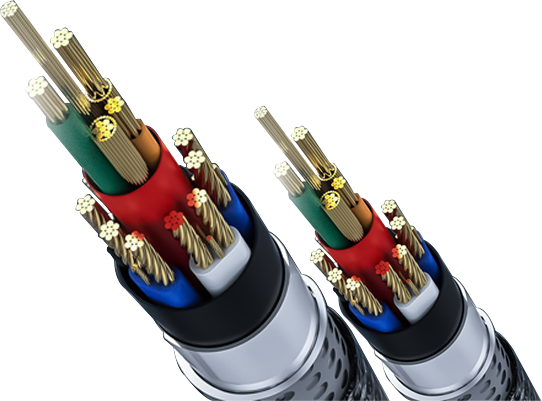
From an industry standard perspective, insulated cable is a cable product primarily composed of a conductor and insulation layer, with optional additional structures such as inner liners, shielding layers, armor layers, and outer jackets based on requirements. Its core structure is “conductor + insulation layer”: the conductor transmits electrical energy or signals, while the insulation layer envelops the conductor to provide electrical isolation and environmental protection. Together, they ensure the cable's conductivity and safety performance.
Core Functions of the Insulation Layer
The core functions of the insulation layer manifest in three key aspects: First, it prevents contact leakage by isolating the conductor from external objects (such as human bodies, equipment casings, or soil), thereby avoiding electric shock incidents. Second, it safeguards system security by preventing short circuits between different conductors, ensuring stable operation of power systems. Third, it minimizes current leakage, reduces energy loss, and enhances the transmission efficiency of the cable. Additionally, the insulation layer provides mechanical protection for the conductor, slowing oxidation and wear.
Core Differences Between Insulated Cables and Bare Conductors
Bare conductors (e.g., overhead bare wires) consist solely of conductive material without insulation. They rely on external components like supports and insulators for electrical isolation, making them suitable only for long-distance transmission in high-altitude, open, unpopulated areas. Insulated cables, however, possess inherent insulation and offer the following core advantages:
Enhanced safety: Eliminates the need for external isolation devices, allowing direct installation in complex environments like walls, cable trenches, and underground spaces to prevent accidental contact and electrocution;
Superior environmental adaptability: Insulation resists degradation from UV radiation, corrosion, and other environmental factors, making it suitable for indoor, outdoor, and underground applications;
Broader applicability: Compatible with low, medium, and high voltage levels, meeting diverse needs across residential, industrial, and renewable energy sectors;
Enhanced operational stability: Effectively prevents faults like short circuits and leakage currents, reducing maintenance costs.
Common Application Scenarios for Insulated Cables
Insulated cables are applied across the entire power system chain, with core scenarios including: indoor wiring for residential buildings, office towers, shopping malls, and other structures; power transmission and distribution in urban distribution grids and substations; power supply and automation control for machinery in industrial plants and chemical complexes; collection and transmission lines for renewable energy power stations such as photovoltaic and wind farms; and power supply for specialized environments like ships, offshore platforms, and electric vehicles.
Core Components of Insulated Cables
The performance of insulated cables is determined by their structure. Core components include essential conductors and insulation layers, along with optional inner liners, shielding layers, armor layers, and outer jackets. Each layer collaborates to ensure conductivity, safety, and environmental adaptability.
The performance of insulated cables is determined by their structure. The core consists of essential conductors, insulation layers, and optional inner liners, shielding layers, armor layers, and outer jackets. Each layer collaborates to ensure electrical conductivity, safety, and environmental adaptability.
Conductors: The Core of Power Transmission
The conductor is critical for transmitting electrical power/signals. Its material and structure influence conductivity, strength, and cost.
Mainstream Materials: Copper conductors (superior conductivity, high strength, suitable for medium/high voltage and high-load applications, higher cost); Aluminum conductors (lower cost, lighter weight, ideal for long-distance overhead lines and cost-sensitive projects, prone to oxidation requiring special treatment); Tinned copper conductors (corrosion-resistant, excellent weldability, suitable for control/communication cables with high jointing requirements).
Structural Types: Solid conductors (simple structure, high strength, suitable for fixed installations, poor flexibility); Stranded conductors (excellent flexibility, suitable for mobile/bending applications, uniform conductivity, industry mainstream).
Insulation Layer: Safety Barrier
Enveloping the conductor exterior, the insulation layer directly determines the cable's safety rating, weather resistance, and service life.
Core Requirements: High insulation resistance to prevent current leakage; excellent thermal stability to withstand operating temperatures; flame-retardant/fire-resistant properties to reduce fire risks.
Structural Positioning: Directly encases the conductor, positioned between the conductor and the inner sheath/outer jacket; Single-core cables insulate a single conductor, while multi-core cables provide individual insulation for each conductor.
Mainstream Insulation Materials for Insulated Cables and Their Characteristics
Insulation materials are the core factor determining cable performance, with significant differences in temperature resistance, weather resistance, cost, and suitability across materials. Current industry-standard insulation materials include PVC, XLPE, rubber, LSZH, etc.
PVC (Polyvinyl Chloride)
The most widely used low-voltage insulation material, offering low cost, easy processing, and acid/alkali resistance. Suitable for indoor low-voltage applications (building wires, indoor control cables). Long-term operating temperature: 60-70°C. However, it releases toxic gases when burning, has poor heat resistance, and becomes brittle at low temperatures.
PVC dominates the low-voltage insulation market due to its cost advantage.
XLPE (Cross-linked Polyethylene)
The mainstream material for mid-to-high-end cables, XLPE outperforms PVC with superior heat resistance, aging resistance, and insulation properties. Its long-term operating temperature ranges from 90-125°C, making it suitable for low-to-high-voltage power cables, direct underground burial, and renewable energy power stations. Its drawbacks include higher cost and complex processing techniques.
XLPE is an insulating material produced by converting polyethylene into a three-dimensional crosslinked network structure. It is the mainstream choice for mid-to-high-end insulated cables, offering comprehensive performance advantages over PVC.
Rubber Insulation (EPR, EPDM, Natural Rubber)
Offers excellent flexibility and resistance to extreme temperatures, suitable for flexible cables and harsh environments (wind power, mining, mobile equipment). EPR provides good weather resistance, EPDM offers corrosion resistance, while natural rubber excels in flexibility but has poor aging resistance; overall costs are relatively high.
Rubber insulation materials, with their outstanding flexibility and resistance to high and low temperatures, serve as the core insulation choice for flexible cables and cables in harsh environments.
LSZH (Low Smoke Zero Halogen)
An environmentally friendly and safe material that emits no toxic gases when burned and has low smoke density, making it suitable for densely populated/enclosed environments (subways, hospitals, high-end campuses). It offers good weather resistance but costs over 50% more than PVC and has slightly poorer low-temperature flexibility.
LSZH is a low-smoke, zero-halogen polyolefin insulation material. With environmental friendliness and safety as its core advantages, it is the preferred insulation material for densely populated and enclosed environments.
Conclusion
Insulated cables form the core component of modern power systems. Their fundamental value lies in achieving electrical isolation through insulation layers, ensuring the safe and efficient transmission of electrical energy while adapting to diverse scenarios and operating conditions. By definition, insulated cables feature a core structure of “conductor + insulation layer,” with additional components like sheathing or armor added as needed. Material-wise, insulation materials such as PVC, XLPE, rubber, and LSZH each offer distinct advantages suited to different applications. Classification-wise, they can be categorized by voltage level, application scenario, and environmental conditions to precisely match diverse requirements.