Understanding the Structure of Concentric Cable
In modern power transmission and distribution networks, concentric cables are pivotal to maintaining stable power system operations. From urban centers to rural areas, they are ubiquitous, undertaking critical tasks such as power delivery and grounding.
As a vital component in power transmission, the unique concentric design of concentric cables plays a significant role in power distribution and grounding systems. It efficiently delivers electrical energy to end-users, ensuring stable and reliable power supply. Within grounding systems, it also safeguards electrical safety by preventing leakage currents and electric shock incidents.
Understanding the structure of coaxial cables is essential for their efficient application, performance optimization, and safe usage. Installation personnel who grasp the structure can install accurately and quickly, reducing errors and losses; engineers with structural knowledge can select and configure cables appropriately to achieve optimal performance; users with in-depth structural understanding can facilitate maintenance and management, promptly identifying and preventing safety hazards to ensure the long-term stable operation of power systems.
What is a Coaxial Cable?
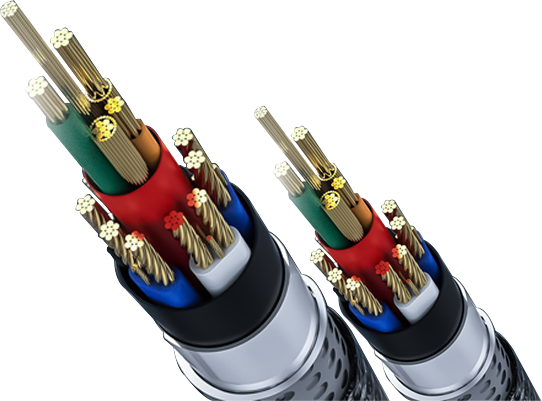
Structural Analysis
Central Conductor: As the core component, it is typically made of highly conductive materials like copper or aluminum, bearing the primary responsibility of signal transmission. The central conductor can be solid or stranded. A stranded central conductor effectively enhances cable flexibility, making it easier to install and use in complex environments.
Insulation Layer: Tightly encircling the central conductor, its primary function is to effectively isolate the central conductor from the external shielding layer, preventing current leakage and signal interference. Common insulation materials include polyethylene, polyvinyl chloride (PVC), or Teflon. The thickness of the insulation layer critically impacts the cable's electrical characteristics, particularly playing a key role in capacitance and signal transmission quality. Appropriate insulation thickness ensures stable cable operation across diverse environments, guaranteeing reliable signal transmission.
Shielding Layer: A critical component of concentric cables, typically composed of metal braided mesh, aluminum foil, or a combination of both. Its primary function is to prevent external electromagnetic interference (EMI) from affecting signal transmission while minimizing outward radiation of internal signals. The shield design directly determines the cable's interference resistance. A high-quality shield effectively blocks external electromagnetic interference, ensuring stable and accurate signal transmission. In high-frequency signal transmission, an effective shield significantly enhances the cable's transmission performance.
Outer Sheath: Located at the cable's outermost layer, it primarily protects the cable from physical damage, corrosion, and various environmental factors. Common outer sheath materials include PVC, Low Smoke Zero Halogen (LSZH), and Polyethylene (PE). These materials offer excellent abrasion resistance, corrosion resistance, and weather resistance, providing reliable protection for the cable under diverse environmental conditions and extending its service life.
Construction Details of Coaxial Cable
Center Conductor
The center conductor forms the core of coaxial cable, functioning like an artery to transport electrical power. It is typically made of highly conductive copper or aluminum. Copper offers superior conductivity, good mechanical strength, and ductility, making it ideal for high-performance transmission applications. Aluminum, being cost-effective and lightweight, is widely used in cost- and weight-sensitive scenarios. Though its conductivity is slightly lower than copper, proper design can still meet most power transmission needs. The design and material selection significantly impact the cable's overall performance.
Inner Insulation Layer
The inner insulation layer surrounds the central conductor, providing insulation. Common insulation materials include polyvinyl chloride (PVC), cross-linked polyethylene (XLPE), and polyethylene (PE). PVC is low-cost, flexible, and offers stable insulation, making it suitable for indoor wiring. XLPE excels in heat resistance and electrical performance, ideal for high-temperature environments. PE provides superior electrical and moisture resistance, used in applications requiring high moisture protection. Material selection must align with specific environmental demands.
Concentric Conductors
Concentric conductors consist of bare copper or tinned copper wires spirally wound around the insulation layer. They serve as the neutral conductor, a critical component of the grounding system, and the shielding layer. In three-phase power systems, they balance the three-phase currents, safely divert leakage currents during equipment faults, and shield against external interference in electromagnetically sensitive environments.
Outer Sheath
The outer sheath constitutes the cable's outermost protective layer. Common materials include PVC, PE, and low-smoke zero-halogen (LSZH) compounds. PVC offers low cost, high strength, and corrosion resistance for general power applications; PE provides excellent weather resistance and flexibility for outdoor use; LSZH materials are environmentally friendly, low-smoke, and non-toxic, suitable for densely populated areas and locations with stringent environmental requirements.
Diverse Types of Concentric Cables
Single-Core Concentric Cable
Single-core concentric cables feature a simple structure comprising a central conductor, insulation layer, concentric conductor, and outer sheath. They efficiently transmit single-phase currents and are commonly used in urban streetlighting systems and industrial equipment to ensure power supply reliability.
Two-Core Concentric Cable
Two-core concentric cables integrate live and neutral wires to power single-phase electrical equipment. They are commonly used to supply power to small household appliances, commercial lighting fixtures, and small electrical devices.
Separated concentric cables
Separated concentric cables isolate the neutral wire from the ground wire, enhancing electrical system safety. Widely used in locations with high electrical safety requirements, such as hospitals and data centers, they reduce the risk of leakage currents and prevent electrical interference.
Armored Concentric Cable
Armored concentric cable incorporates steel armor for high mechanical strength, enabling operation in harsh environments and resisting mechanical damage. It is frequently used in underground cable installations, factory workshops, and construction sites to ensure reliable power transmission.
Significant Advantages of Concentric Cable
Superior Electrical Safety
The neutral and ground wires in concentric cables surround the central conductor, forming a safety barrier. During leakage, current is rapidly diverted to ground, minimizing electric shock risks and safeguarding household members and industrial equipment.
Reduced Electromagnetic Interference
The shielding structure of concentric cables blocks external electromagnetic interference from entering while suppressing internal signal radiation outward. This minimizes impact on surrounding electronic devices, ensuring stable communication signals for hospital medical equipment and communication base stations.
Enhanced Mechanical Protection
The outer sheath and armor layer provide mechanical protection for concentric cables, withstanding soil pressure during underground installation, construction impacts, and external forces in industrial workshops or construction sites, ensuring reliable power transmission.
Wide Applications of Concentric Cables
Low-Voltage Distribution
In low-voltage distribution, concentric cables emerge as an ideal choice for power transmission due to their unique structure and performance advantages. They efficiently and stably deliver low-voltage electricity in residential communities, small factories, and commercial premises, safeguarding power usage and operational activities while ensuring stable low-voltage distribution system operation.
Service Entrance Cables
As service entrance power lines, concentric cables feature a compact structure with minimal space requirements, facilitating easy wiring and installation. With outstanding insulation and shielding properties, they ensure safe and stable household power supply, providing reliable electricity for appliances. Their durability and reliability reduce maintenance costs and operational risks.
Street Lighting and Outdoor Electrical Systems
In street lighting and outdoor electrical systems, concentric cables withstand complex outdoor environments with UV resistance, moisture protection, and weatherproofing. They deliver stable power to outdoor lighting equipment, creating safe and comfortable nighttime environments.
Summary and Outlook
With its unique structure and exceptional performance, concentric cable holds a significant position in modern power transmission and distribution. From the central conductor to the outer sheath, each layer plays a critical role in ensuring efficient cable operation. Its notable advantages in electrical safety, interference resistance, and mechanical protection make it an ideal choice for numerous applications.
When selecting concentric cables, it is crucial to thoroughly consider factors such as voltage and current requirements, installation environment, conductor material, sheath type, as well as cost, flexibility, and long-term performance. Only through making the right choice can the advantages of concentric cables be fully leveraged, ensuring the safe and stable operation of power systems