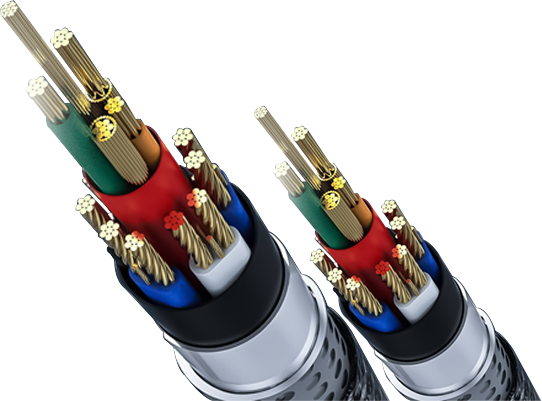
Overhead conductors form the backbone of power transmission and distribution networks worldwide. For utility engineers, electrical contractors and bulk procurement managers, AAC, AAAC and ACSR are three of the most common bare overhead conductors. They all use aluminium as the main conductive material, yet their internal structure, mechanical strength, corrosion resistance and cost vary greatly. Picking the wrong conductor can lead to excessive sag, tower overloading, premature corrosion, higher power loss or inflated project budgets. This article breaks down what AAC, AAAC and ACSR are, compares their core performance, and offers practical guidance to help you select the right overhead conductor for your power project.
1. What are AAC, AAAC and ACSR Conductors?
AAC (All Aluminium Conductor)
AAC stands for All Aluminium Conductor. As the name suggests, it is stranded purely from hard-drawn aluminium wires, with no reinforcing steel core or alloyed aluminium. Multiple solid aluminium strands are twisted together to form a single conductor.
The aluminium used for AAC is standard 1350-H19 hard-drawn aluminium, which delivers excellent electrical conductivity. Since there is no steel component, the entire cross-section contributes to current flow. Its biggest advantage is low electrical resistance. However, pure aluminium has relatively low tensile strength. AAC stretches easily under heavy load, ice or wind, resulting in large line sag.
For this reason, AAC is mainly limited to short-span distribution lines, where supporting poles are close together and mechanical loading is mild. It is lightweight and easy to handle, but not suitable for long spans or areas with severe weather conditions.
AAAC (All Aluminium Alloy Conductor)
AAAC means All Aluminium Alloy Conductor. Instead of pure aluminium, AAAC uses aluminium-magnesium-silicon alloy strands. The alloy formula is engineered to boost mechanical strength while retaining good conductivity. There is no steel core inside AAAC; the whole conductor is made of aluminium alloy.
Compared with AAC, the alloy material significantly improves tensile strength, yield strength and anti-creep performance. Creep refers to permanent elongation of metal under long-term tension, a common headache for overhead lines. AAAC suffers far less creep than AAC. It also has superior corrosion resistance, especially in coastal, salt-laden or industrial corrosive environments.
AAAC sits in the middle performance range between AAC and ACSR. It is lighter than ACSR and avoids galvanic corrosion risks that exist when aluminium contacts steel. It is widely used for medium-span distribution and sub-transmission lines.
ACSR (Aluminium Conductor Steel Reinforced)
ACSR, Aluminium Conductor Steel Reinforced, is the most widely recognized overhead conductor globally. It adopts a composite layered structure: the central core is made of high-strength galvanized steel strands, and the outer layers are wrapped with hard-drawn aluminium strands. The aluminium layers carry electric current, while the steel core bears almost all the mechanical tension of the line.
This separated design gives ACSR outstanding tensile strength. It can handle very long spans between towers, heavy ice load and strong wind. Engineers can reduce the total number of towers for long transmission routes, which saves substantial investment on tower fabrication and foundation work.
The downside of ACSR comes from the bi-metal structure. Aluminium and steel have different electrochemical potentials. When exposed to moisture, galvanic corrosion may occur at the interface between aluminium strands and the steel core. This risk rises sharply in coastal salt spray, chemical zones and humid tropical regions. Also, steel adds weight to the conductor, increasing the load on towers.
2. Core Comparison: AAC vs AAAC vs ACSR
Electrical Conductivity
AAC has the highest conductivity among the three, because 100% of its cross-section is pure conductive aluminium. AAAC uses aluminium alloy; alloying elements reduce conductivity slightly, so AAAC conductivity is lower than AAC. ACSR’s steel core does not conduct electricity, only the outer aluminium layers work for power transmission. For the same overall outer diameter, ACSR has less conductive area than AAC.
Mechanical Performance
ACSR offers the highest tensile strength, supporting ultra-long spans and heavy ice/wind loads. AAAC comes second, with good tensile strength and minimal creep. AAC has the weakest mechanical performance and is prone to sagging and permanent elongation under sustained tension.
Corrosion Resistance
AAAC is the winner in corrosive environments. The homogeneous aluminium alloy structure eliminates bimetallic corrosion. AAC has decent corrosion resistance, as it contains no steel. ACSR is vulnerable to galvanic corrosion at the aluminium-steel boundary, especially in coastal and industrial areas. Special anti-corrosion ACSR versions are available but raise the cost.
Weight
AAC is the lightest, followed by AAAC. ACSR is heavier due to the steel core. Heavier conductors require stronger towers and foundations.
Cost
AAC usually has the lowest unit material cost. AAAC sits at a medium price level. Standard ACSR is economical for long trunk projects, but anti-corrosion grades of ACSR become expensive. Total project cost must include tower and foundation expense, not only conductor price.
Typical Span Range
- AAC: Short spans, normally less than 50m
- AAAC: Medium spans, roughly 50m to 120m
- ACSR: Long spans, 100m and above, can reach hundreds of meters for main transmission lines
3. Suitable Application Scenarios
When to use AAC
AAC is selected for short-span, low-load overhead distribution lines in inland areas with mild weather. It works well for small local power networks, street lighting lines and short branch circuits where pole spacing is small.
It is a cost-effective option when span length is limited, ice and wind load are low, and corrosion risk is minimal. Do not use AAC for long spans, mountainous areas or regions with heavy ice accumulation. Excessive sag will reduce ground clearance and create safety hazards.
When to use AAAC
AAAC is preferred for medium-span distribution and sub-transmission lines, especially in coastal areas, islands, or locations with chemical pollutants. Its excellent corrosion resistance and low creep make maintenance much easier than ACSR in these harsh environments.
Many African and Southeast Asian rural grid upgrade projects adopt AAAC. It balances strength, weight and corrosion performance. Since there is no steel core, the conductor is lighter than ACSR, so utility poles do not need to be as robust. AAAC is also popular for urban overhead distribution renovation projects.
AAAC is not the best choice for ultra-long spans or heavy ice zones, where ACSR’s supreme tensile strength is irreplaceable.
When to use ACSR
ACSR remains the primary choice for high-voltage main transmission trunk lines crossing wide plains, valleys and mountainous regions. Where towers are spaced far apart, ACSR’s high tensile strength reduces tower quantity and cuts overall capital expenditure.
It is widely deployed for national grid interconnection projects, large power plant outgoing lines and long-distance bulk power delivery. Standard ACSR performs reliably in ordinary inland atmospheric conditions.
However, project designers must be cautious in salt-spray coastal regions. Ordinary ACSR will suffer accelerated galvanic corrosion. In such cases, either anti-corrosion ACSR or AAAC should be considered instead.
4. Practical Selection Checklist for Engineers & Buyers
Before finalising your conductor type, evaluate these key project factors one by one:
Span length
Short span (<50m), mild load → AAC Medium span (50–120m), coastal / corrosive atmosphere → AAAC Long span (>100m), heavy wind/ice, main transmission trunk → ACSR
Environmental corrosion level
Coastal, salt spray, chemical plant nearby → Prioritize AAAC or anti-corrosion ACSR Dry inland plain, low pollution → AAC or standard ACSR
Voltage level and power capacity
Low voltage local distribution: AAC or AAAC Medium voltage sub-transmission: AAAC or ACSR High voltage main transmission: ACSR
Tower / pole budget
If you want fewer towers and longer spans, ACSR is the solution. If your poles are lightweight and closely spaced, AAAC or AAC can reduce structural investment.
Maintenance plan
AAAC needs less maintenance in corrosive zones. ACSR requires periodic inspection to check corrosion at aluminium and steel interfaces. AAC needs monitoring for sag growth.
5. Common Misconceptions to Avoid
Many buyers assume ACSR is always the best overhead conductor. This is not true. ACSR’s steel core adds weight and corrosion risk. In medium-span coastal distribution projects, AAAC often delivers better long-term performance and lower maintenance cost than standard ACSR.
Another mistake is choosing AAC for long spans. Pure aluminium creeps significantly over decades. Sag will gradually increase, threatening clearance and safety.
AAAC cannot fully replace ACSR for long-span high voltage transmission. Its tensile strength cannot match ACSR, so it cannot support tower spans of several hundred meters.
Conclusion
AAC, AAAC and ACSR are all established bare overhead conductors, each designed for distinct working conditions.
AAC: pure aluminium, highest conductivity, low strength, short spans only.
AAAC: aluminium alloy, balanced strength and corrosion resistance, ideal for medium spans and corrosive environments.
ACSR:aluminium with steel reinforcement, maximum tensile strength, the workhorse for long-distance high voltage transmission lines.
There is no universal “best” conductor. The optimal selection depends on span length, wind and ice load, atmospheric corrosion, voltage class, available tower budget and long-term maintenance strategy.
For your next overhead power project, work with a professional cable manufacturer to confirm conductor size, stranding structure and material grade. A properly specified overhead conductor will secure stable power delivery, extend service life and optimize your total project cost.