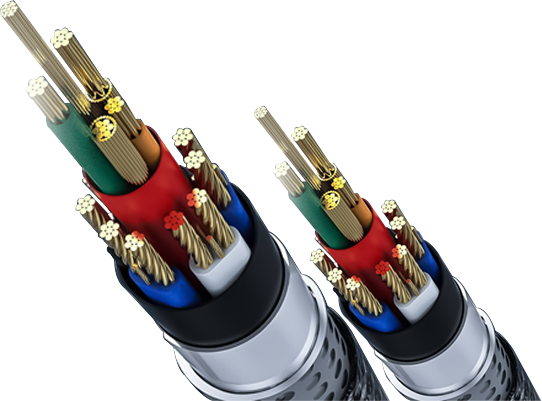
What is Outdoor Cable?

Sep 17, 2026

What is Outdoor Cable?

Outdoor electrical and communication systems operate under much harsher conditions than indoor wiring. Rain, direct sunlight, temperature extremes, moisture, soil corrosion, and physical stress can degrade ordinary cables over time. Using an indoor cable in an exposed outdoor location can lead to cracked insulation, water ingress, reduced electrical performance, short circuits, and safety hazards. That is why outdoor cable plays a critical role in reliable infrastructure.
An outdoor cable is a weather-resistant, mechanically robust electrical or communication cable designed specifically for exposed outdoor environments. Unlike standard indoor cables, it is engineered to withstand continuous exposure to natural conditions while maintaining stable performance over long periods.
Outdoor cables are not simply indoor cables with a thicker jacket. Their insulation, sheath materials, structural layers, and testing standards are developed for environmental durability. In this guide, we will explain the main characteristics of outdoor cable, the difference between outdoor and indoor cables, common types, typical applications, and important considerations for use.

What Is Outdoor Cable? Core Characteristics and Design Principles

The main purpose of outdoor cable design is to provide stable operation in outdoor environmental conditions. The following characteristics distinguish outdoor-rated cables from standard indoor wiring.

Weatherproof and Waterproof Performance

Outdoor cables are built to resist rain, humidity, and moisture penetration. Depending on the construction, the outer sheath, inner barriers, and water-blocking materials help prevent water from reaching the conductors. Some direct-bury cables include water-blocking tapes or compounds that limit longitudinal water movement if the jacket is damaged. This feature is especially important for underground installations and permanently wet locations.

UV and Sunlight Resistance

Ultraviolet radiation from sunlight can cause ordinary plastic materials to become brittle, fade, crack, or degrade over time. High-quality outdoor cables use UV-stabilized PVC, PE, or special outdoor-grade sheaths. These materials help resist long-term sunlight exposure and maintain mechanical and electrical properties. Cables without UV resistance are generally not suitable for exposed overhead or exterior wall installations.

Wide Temperature Adaptability

Outdoor environments can experience significant temperature variations, from hot summer days to freezing winter conditions. Outdoor cable insulation and sheathing are formulated to remain flexible at low temperatures while retaining strength at high temperatures. A wide operating temperature range helps reduce the risk of cold cracking or heat-related softening.

Mechanical Strength

Outdoor cables often require greater mechanical durability than indoor cables. Overhead cables must withstand installation tension, wind load, and movement. Buried cables may be exposed to soil pressure, rocks, and ground movement. For more demanding applications, additional reinforcement or armor layers may be used to improve crush resistance and protection against physical damage.

Corrosion and Biological Resistance

Outdoor cables may be exposed to moisture, soil chemicals, acids, alkalis, and other corrosive elements. Buried cables in particular need sheath materials that resist chemical attack. In some installations, protection against rodents and other biological damage is also important. Metallic armor or special protective layers can help extend service life in difficult soil conditions.

Safety and Compliance

Qualified outdoor cables should meet relevant industry standards for electrical safety, environmental performance, and mechanical durability. Compliance with standards such as IEC, UL, CSA, or equivalent regional requirements helps verify that the cable has been tested for conditions relevant to outdoor use. Always check the product specifications and compliance markings before selecting cable for commercial, municipal, or industrial projects.

Main Types of Outdoor Cables

Outdoor cables can be grouped into three main categories: outdoor power cables, outdoor communication and data cables, and special-purpose outdoor cables.

Outdoor Power Cables

Outdoor power cables are used to transmit electrical energy in low-voltage and medium-voltage systems.
  • Low-voltage outdoor power cable: Typically used for street lighting, garden circuits, landscape power, small commercial outdoor loads, and residential exterior wiring.
  • Medium-voltage outdoor power cable: Used for larger power distribution projects, such as municipal networks, industrial parks, substation connections, and site power transmission.

Outdoor Communication and Data Cables

These cables are designed to carry data and communication signals rather than heavy power loads.
  • Outdoor fiber optic cable: Used for telecommunications links, site-to-site data connections, surveillance backhaul, and network infrastructure. Fiber optic cables are lightweight and immune to electromagnetic interference.
  • Outdoor Ethernet / LAN cable: Designed for outdoor data connections such as IP cameras, wireless access points, remote sensors, and outdoor network equipment. These cables usually require UV-resistant and water-resistant construction.

Special-Purpose Outdoor Cables

  • Direct-bury outdoor cable: A cable construction suitable for underground installation, often with enhanced crush resistance, corrosion resistance, and water-blocking features.
  • Aerial bundled cable (ABC): An overhead cable designed for power distribution, with construction intended to resist wind, ice, UV exposure, and mechanical stress.
  • Fire-resistant or low-smoke outdoor cable: Used in public infrastructure, tunnels, and high-safety installations where reduced flame spread and low smoke emission are important.

Outdoor Cable vs Indoor Cable: Key Differences

Aspect Outdoor Cable Indoor Cable
Operating environment Exposed outdoors, underground, overhead, or wet locations Dry indoor spaces, buildings, and protected cavities
Sheath material Often UV-stabilized PE, PVC, or LSZH; may include water-blocking layers Standard PVC or indoor-grade materials
Waterproof performance Designed for moisture resistance and water ingress protection Generally minimal or no waterproof design
Mechanical strength Higher tensile strength, crush resistance, and optional armor Light mechanical protection only
Corrosion and rodent resistance Available in buried or armored constructions Usually not designed for underground or corrosive environments
Service life Longer when properly installed in suitable outdoor conditions Shorter if exposed to outdoor elements
Typical applications Street lights, solar farms, underground utilities, outdoor networks Interior wiring, equipment connections, indoor data networks
Indoor cables are not designed for continuous exposure to rain, sunlight, or soil. Even if a temporary connection appears to work, exposure can accelerate aging and create hidden electrical risks.

Common Applications of Outdoor Cables

Outdoor cables are used across many sectors where power or data must be distributed outside protected buildings.

Municipal Infrastructure

Street lighting, traffic signals, public park power, city surveillance systems, and municipal power distribution all depend on outdoor cables. These applications usually require long service life, reliable weather resistance, and compliance with project specifications.

Residential and Landscape

Low-voltage outdoor cables are commonly used for garden lighting, exterior power outlets, villa perimeter wiring, landscape features, and residential security cameras. Direct-bury cables are often chosen for underground garden and yard installations.

Industrial and Commercial

Industrial plants, warehouses, commercial buildings, and outdoor facilities use outdoor cables for exterior power distribution, equipment connections, lighting, and security systems. Industrial sites with higher mechanical risk may select armored or reinforced outdoor cables.

Communication Networks

Outdoor cables support telecom base stations, fiber backhaul links, outdoor Wi-Fi networks, surveillance systems, and remote data connections. Communication projects often require a combination of power and data cabling outdoors.

Renewable Energy

Solar photovoltaic systems and wind farms are major users of outdoor cables. These cables must withstand long-term sunlight, temperature cycling, moisture, and mechanical stress over the operational life of the renewable energy project.

Important Considerations for Using Outdoor Cables

Although this guide does not include a formal buying guide, there are still practical factors to consider when planning outdoor cable installations.
First, identify the installation method. Cables installed overhead have different requirements than cables buried underground or mounted on exterior walls. Overhead installations generally require UV resistance and adequate tensile strength, while buried installations need water resistance, corrosion resistance, and often greater mechanical protection.
Second, confirm the electrical rating. The cable must have a voltage rating and conductor size appropriate for the load, circuit length, and installation environment. Undersized conductors can lead to overheating and voltage drop issues.
Third, check environmental parameters. These include UV resistance, waterproof level, operating temperature range, corrosion resistance, and the need for armor or additional mechanical protection.
Fourth, follow applicable standards and local electrical codes. Burial depth, separation from other utilities, protection requirements, and connection methods should be addressed according to project specifications and regulatory requirements.
Finally, do not use indoor cable as a substitute for outdoor cable, even temporarily. Indoor cables are not designed for prolonged exposure to the elements, and premature failure can create safety hazards.

Frequently Asked Questions

Can indoor cables be used outdoors temporarily?

It is generally not recommended. Indoor cables lack the UV resistance, waterproofing, and mechanical durability required for outdoor exposure. Even temporary use can accelerate aging and create safety risks.

How long does outdoor cable last?

Service life depends on cable quality, environmental conditions, installation method, and maintenance. A properly installed outdoor cable in a suitable environment can provide reliable service for many years. Extreme conditions such as corrosive soil, strong chemicals, or coastal salt spray may reduce service life.

Do all outdoor cables need conduit?

No. Some outdoor cables are specifically designed as direct-bury cables and can be installed underground without conduit under approved conditions. However, conduit may still be required in rocky soil, high-traffic areas, or where local codes require additional protection.

What kind of outdoor cable is used for gardens?

Low-voltage outdoor power cables are commonly used for garden lighting and exterior power. For garden cameras and network devices, outdoor-rated Ethernet cables may be used. Any part of the cable exposed above ground should have adequate UV resistance.

Is an outdoor Ethernet cable different from a regular Ethernet cable?

Yes. Regular Ethernet cables are usually designed for indoor use. Outdoor Ethernet cables typically have UV-resistant jackets, waterproof construction, and additional durability for exposed or wet locations.

Conclusion

Outdoor cable is a specialized category of electrical and communication cable designed to withstand the environmental stresses that standard indoor cables cannot. Its weather-resistant materials, waterproof construction, UV resistance, temperature stability, and mechanical strength help ensure long-term reliability in exposed locations.
Whether used for municipal infrastructure, residential landscapes, industrial facilities, communication networks, or renewable energy projects, outdoor cable plays an essential role in maintaining safe and continuous power and data distribution. Selecting the right cable for the installation method and environmental conditions is key to reducing premature failure and ensuring long-term performance.
 
Email
CopyRight © 1989 Chunbin Cable Co., Ltd.
Technical support :Coverweb
Fill in you have to consult
We will contact you as soon as we receive the inquiry and ensure the security of your information.
Name*
Email*
Phone
Country
Message*