The Complete Guide to ABC Cable
Modern power grids are facing increasing demands for safety and efficiency, making traditional bare conductor systems (such as ACSR steel-core aluminum stranded conductors) unsuitable. Exposed conductors are prone to short circuits, creating a high risk of electric shock, and they rely on complex insulators and crossarms, resulting in high installation and maintenance costs. The emergence of aerial insulated cables (ABC cables) has revolutionized this situation.
With its core design of "bundled insulated conductors," ABC cables have become a mainstream solution for overhead power distribution worldwide. They are widely used in urban residential power supply, rural electrification, and renewable energy grid integration, ensuring safer and more efficient power transmission for a variety of needs.
What is ABC Cable? Definition and Core Concepts
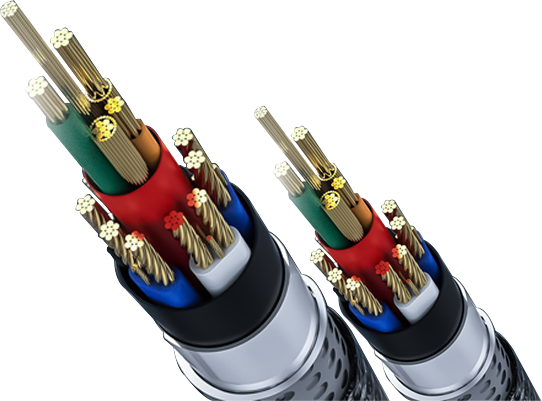
Aerial insulated cable (ABC cable) is an overhead cable system that twists multiple insulated phase conductors around a neutral conductor (or load-bearing cable) that carries the mechanical load. Unlike traditional bare conductors, the phase conductors are all insulated. Its core design philosophy is based on the three key principles of "safety, reliability, and low maintenance," fundamentally addressing the safety hazards and operational challenges associated with bare conductors. ABC cables are primarily classified into two application categories based on voltage levels:
Low-voltage ABC cables: With voltage levels up to 1 kV (commonly 0.6/1 kV), they are widely used in terminal distribution networks such as residential communities and commercial districts.
Medium-voltage ABC cables: With voltage levels ranging from 6 kV to 35 kV, they are suitable for medium-distance power transmission scenarios, such as substation outgoing lines and rural distribution trunk lines.
This voltage adaptability allows ABC cables to meet the precise power supply needs of end users while also supporting regional power distribution.
ABC Cable Types - Classification by Application Scenario and Voltage Level
ABC cables can be divided into various types based on voltage level and number of conductors, precisely matching the needs of different scenarios:
Low-voltage (LV) ABC cables: With voltage levels of 0.6/1 kV and typically containing 2-5 conductors, they are primarily used for power distribution in residential communities, commercial buildings, and small industrial terminals. They are core components of urban power distribution networks. • Medium Voltage (MV) ABC Cable: With voltage levels of 6-35kV, it features a thicker conductor structure and thicker insulation. It is suitable for trunk transmission from substations to regional distribution centers, long-distance rural distribution, and can withstand higher voltage surges.
Configuration types categorized by the number of conductors:
Duplex: 1 phase conductor + 1 catenary cable, suitable for single-phase power supply scenarios (such as small residential buildings);
Triplex: 2 phase conductors + 1 catenary cable, suitable for single-phase three-wire power supply;
Quadruplex: 3 phase conductors + 1 catenary cable, suitable for three-phase four-wire power distribution, and the mainstream choice for industrial and residential power distribution;
Quintuple: 4 phase conductors + 1 catenary cable, used in special three-phase five-wire scenarios to improve power supply stability. Note: Globally mainstream ABC cables comply with international standards such as IEC 60502 (International Electrotechnical Commission), NFC 33-209 (French Standard), and ASTM B231/B232 (American Standard), ensuring product compatibility and safety.
Core Advantages of ABC Cables - Why They Become the Future of Overhead Power Distribution
The key to ABC cables replacing traditional bare conductors lies in their ability to translate technological advantages into practical application value, bringing multiple benefits to power companies, construction contractors, and users:
Significantly Improved Safety and Reduced Risk Costs
The insulation layer completely isolates the conductors, completely eliminating short circuits and electric shocks caused by foreign objects or accidental contact with bare conductors. Data shows that distribution networks using ABC cables can reduce the incidence of safety incidents by over 90%, which is particularly important in densely populated urban areas and rural areas with frequent child activities.
Installation costs reduced by over 30%, construction efficiency doubled.
ABC cables eliminate the complex components required by traditional bare conductors, such as insulators and crossarms, requiring only simple clamps for securing to the tower. Furthermore, the lightweight aluminum conductor design allows a single cable to transmit multiple phases, improving handling and installation efficiency by over 50%. For large-scale power distribution projects, this significantly shortens construction timelines and reduces labor and material costs.
Excellent reliability and adaptability to complex environments.
The XLPE/PE insulation layer offers excellent resistance to UV rays, wind and rain, and eliminates line failures caused by overlapping tree branches and bird nesting. In coastal areas, the corrosion-resistant conductor resists salt spray erosion, extending its service life to over 20 years, far exceeding the 10-15 years of traditional bare conductors.
Sharply Reduced Maintenance Costs and Reduced Power Outage Losses
The insulation layer protects the conductors from oxidation and aging. Regular maintenance only requires checking the tension of the load-bearing cables and the insulation of the joints, reducing maintenance frequency to one-fifth that of traditional lines. Furthermore, the insulation structure reduces power loss (less than 5%) and makes it less susceptible to theft, significantly reducing operational and asset losses for power companies.
Compact Space Compatibility, Balancing Aesthetics and Practicality
The bundled design allows ABC cables to occupy less space. They can be installed along narrow passageways in urban areas with dense high-rise buildings, avoiding the cluttered "spider web" layout of traditional bare conductors and enhancing the aesthetics of the city. ABC cables are an ideal solution for locations with high aesthetic requirements, such as scenic spots and historical and cultural districts.
Typical Application Scenarios - Areas Where ABC Cables Leverage Their Advantages
ABC cables' versatile adaptability has led to their widespread use in the global power distribution sector. The following are some of their most advantageous core applications:
Urban Power Distribution Networks
In densely populated urban centers, ABC cables' safety features and space-saving advantages are particularly prominent. For example, in the renovation of old urban areas in my country's first-tier cities, ABC cables have replaced traditional bare conductors, not only eliminating the risk of short circuits in older lines but also significantly reducing renovation costs by eliminating the need for large-scale tower renovations.
Rural Electrification Projects
Rural areas face complex terrain and a shortage of maintenance personnel. ABC cables' low maintenance and environmental resistance make them an ideal choice. In rural electrification projects in developing regions such as Africa and Southeast Asia, ABC cables, with their "one-time installation, long-term stability" advantage, have become a core support for local electricity coverage, helping millions of households gain access to electricity.
Temporary Power Supply for Construction
Construction sites are complex and experience high turnover. The insulation safety design of ABC cables effectively prevents electric shock accidents. Their lightweight design facilitates temporary installation and removal, adapting to the frequent changes in construction sites, making them the preferred choice for temporary power supply in construction projects.
4. New Energy Grid Connections
In new energy projects such as solar power plants and wind farms, ABC cables are suitable for outdoor environments, withstanding harsh conditions such as high temperatures and strong winds. Their low loss characteristics also improve the transmission efficiency of renewable energy power. For example, at large wind farms in northwest my country, ABC cables have become the mainstream solution for connecting wind turbines to collector lines.
Special Applications in Harsh Environments
In special environments such as coastal areas (resistance to salt spray corrosion), forested areas (preventing short circuits caused by overlapping trees), and humid and rainy regions (water-blocking and insulation), the customized additional layer design of ABC cables precisely adapts to these needs, ensuring stable power transmission. For example, in coastal provinces like Hainan and Fujian, the failure rate of ABC cables in typhoon-prone areas is far lower than that of traditional lines.
International Standards and Quality Assurance
The quality of ABC cables is directly related to power grid security. Selecting products that meet international standards is a key prerequisite for risk mitigation. Currently, the mainstream global standards for ABC cables include:
IEC 60502: A general standard for high-voltage cables developed by the International Electrotechnical Commission, covering core requirements such as insulation, conductors, and mechanical properties;
NFC 33-209: A French standard with stricter requirements for the bundle structure and UV resistance of ABC cables;
ASTM B231/B232: An American standard focusing on conductor material and tensile strength;
BS 7870: A British standard with detailed specifications for low-voltage ABC cables for power distribution applications.
How to Choose the Right ABC Cable? A Practical Shopping Checklist
The requirements for ABC cables vary greatly across different scenarios, and blindly selecting the right cable can easily lead to costly waste or safety hazards. The following is a purchasing checklist compiled by Chunbin Cable engineers to help you accurately match your needs:
Determine voltage level: Determine whether to use low voltage (0.6/1kV) or medium voltage (6-35kV) based on the distribution scenario. For example, choose low voltage for residential areas and medium voltage for substation outgoing lines.
Adapt to the installation environment: Choose corrosion-resistant models with a water-blocking layer for coastal areas, flame-retardant models for forested areas, and lightweight and compact models for urban areas.
Confirm mechanical load: Select the strength of the load-bearing cables based on the distance between towers (span). For spans exceeding 50 meters, choose high-strength steel-core load-bearing cables.
Select insulation material: XLPE insulation is preferred for high-temperature environments (such as industrial areas), while PE insulation can help control costs for ordinary environments.
Verify standard compliance: For export projects, confirm the standard requirements of the target market (for example, IEC 60502 for Europe and ASTM standards for the United States).
Conclusion - Driving the Future of the Power Grid with ABC Technology
The evolution of overhead power distribution from traditional bare conductors to ABC cables is essentially an optimization and upgrade of "safety, efficiency, and cost." ABC cables, with their core insulation bundle design, have significantly reduced safety incident rates, significantly lowered installation and maintenance costs, and boasted exceptional adaptability in complex environments. They have become a core support for urban renewal, rural electrification, and new energy grid integration worldwide.
As the global energy transition accelerates, the demand for reliable power distribution will continue to grow. As a solution that balances safety and efficiency, ABC cables are poised to play a more crucial role in future power grid construction.